Archives: Products

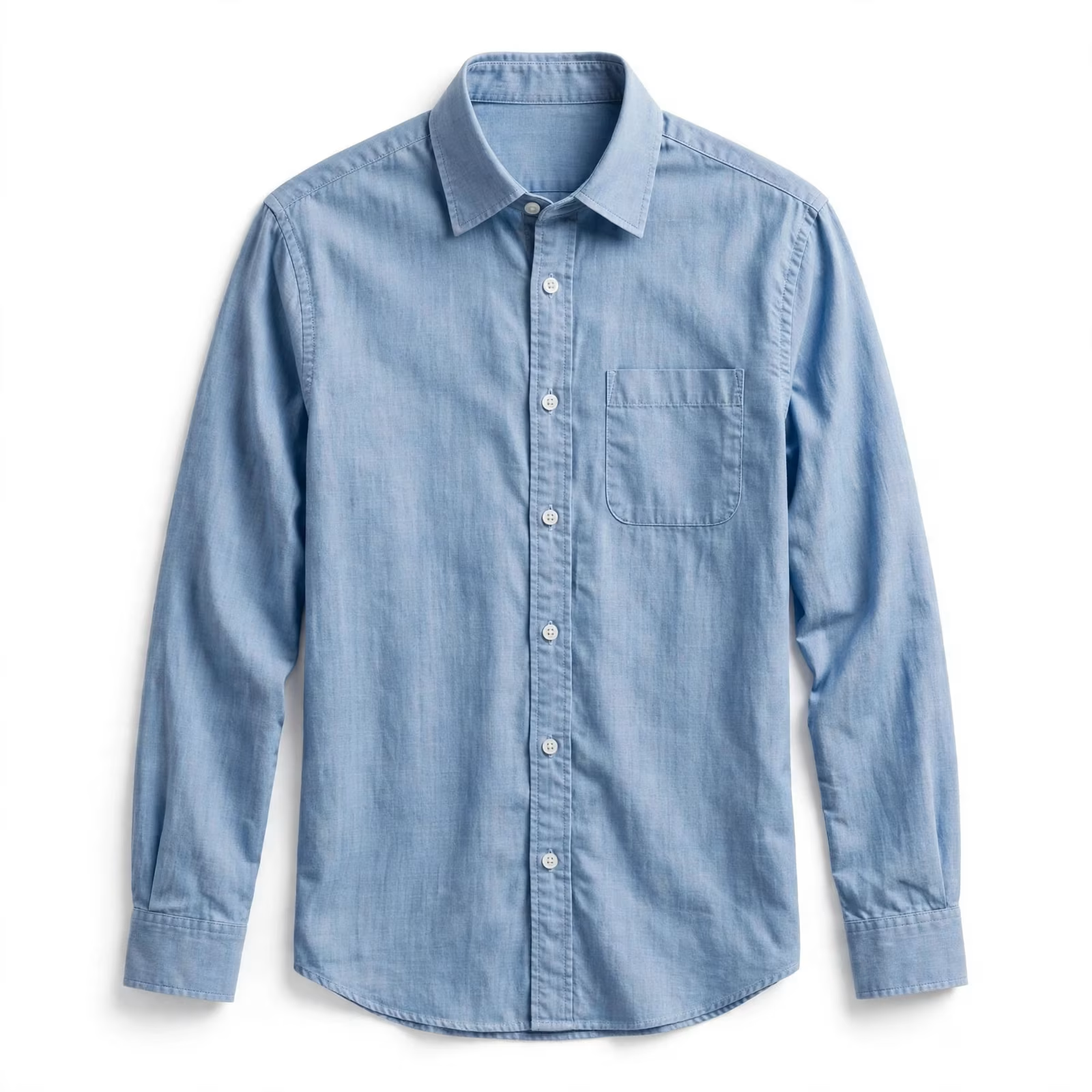
  • Men’s Light Blue Chambray Shirt with Chest Pocket and Curved Hem

    Men’s Light Blue Chambray Shirt with Chest Pocket and Curved Hem

    Chambray Shirt Overview

    Some shirts sell on fashion; the chambray shirt sells on usefulness. In light blue cotton chambray with a point collar, a single chest pocket and a curved hem, it is the shirt a retail range uses to dress a rail between the formal whites and the checks – smart with chinos, relaxed with shorts, and wearable in every month of the year. The reference design pairs it with a matching women’s short-sleeve version, a couples’ programme that resort shops and lifestyle brands run very successfully, and both styles are produced here from the same fabric so the shades match exactly.

    As a chambray shirt manufacturer in Bangladesh, SIATEX produces this style for fashion retailers, resort and hospitality groups, and uniform programmes that want a shirt softer than a formal poplin. Chambray’s plain weave with its white weft gives the cloth its denim-like look at half the weight of denim, which is the whole point: the shirt reads casual and textured in photographs, yet wears light and breathable through a working day or a holiday afternoon.

    Front Design Details

    The front keeps the classic shirt grammar: a point collar with a clean collar stand, a full button front on a stitched placket with white buttons, and one patch pocket on the left chest with a mitred lower corner. Nothing is overworked – no contrast panels, no epaulettes – because the fabric texture is the design. The placket is fused lightly so it lies flat without stiffness, and button spacing follows the standard shirt gauge so the front never gapes between buttons at the chest, the fitting fault customers return shirts for.

    The hem is curved in the traditional shirttail shape, long enough to tuck and stay tucked, with the side seams rising at the hip so the shirt also wears untucked at a tidy length. Sleeves are long with a gauntlet-button placket and adjustable two-button cuffs; the reference styling rolls the sleeves, and the cuff is cut to roll cleanly to the elbow without bulk, a small pattern consideration that makes the casual wear of the shirt actually work.

    Back, Yoke and Pleat

    The back is built on a straight yoke with a single centre pleat below it – the classic shirt construction that gives shoulder-blade room without adding width to the body. The pleat is stitched down at the yoke and opens naturally as the wearer moves, and the yoke itself is double-layered so the shirt hangs from the shoulders with structure rather than clinging. From behind, the shirt reads as cleanly as from the front: no prints, no panels, just the chambray texture and correct proportions.

    Side seams are felled for strength and a flat inside finish, and the armhole is sewn with the shirtmaker’s seam allowance so the sleeve sits smoothly at the shoulder. These are the construction points a shirt buyer turns inside out to check, and they are the points this line is audited on, because a shirt’s quality is mostly invisible from the front photograph and entirely visible in the hand.

    Chambray Fabric

    Chambray is a plain-weave fabric with a coloured warp and a white weft; woven together they produce the soft, slightly heathered blue the camera loves and the detail photograph shows at full size – a fine, even weave with the white fleck running through it. In cotton, it breathes, softens quickly with washing and keeps a casual texture that poplin cannot imitate. This style runs in a light-to-mid weight chambray suited to a shirt worn across seasons; a heavier workwear chambray and a linen-blend chambray-effect cloth run on the same pattern for programmes that want the look with a different hand feel.

    Fabric is checked for weaving slubs beyond the fabric’s natural character, shade consistency across the roll and shrinkage before cutting, and finished shirts are garment-washed lightly or simply soft-finished, as the programme prefers. Colour is the classic light indigo-blue; the weave structure means the colour holds a slightly faded, sun-washed character from new, which is the intended look rather than a defect.

    Fit and Sizing

    The block is a regular men’s fit: shaped slightly at the waist so it does not billow, with room at the chest and shoulder for movement, and a body length graded to the size. Sizes run S to 3XL; for formal and uniform programmes the same style can be graded by collar size with corresponding body measurements, and tall sizing adds body and sleeve length where a market’s chart requires it.

    The matching women’s version is cut on its own shaped block in short sleeves, as shown in the reference, and can also be produced in long sleeves. Ordering the pair from one fabric batch guarantees the couple’s set matches shade-for-shade – the detail that makes the programme photographable and sellable, and the reason buyers place both styles in a single order here.

    Colours, Customisation and Matching Styles

    Light blue is the core colourway and the volume driver. The same chambray construction is dyed in indigo mid-blue, grey, sage and white-fleck colourways across a season, and the style also runs in yarn-dyed checks and stripes on the same block for ranges that want the fit with a pattern. Solid colours take embroidery well: a small chest or sleeve logo for hospitality and resort programmes, tone-on-tone where the branding should whisper.

    Customisation covers private label and size labelling, branded or pearl-effect buttons in place of the standard white, a second chest pocket or a button-down collar as pattern variants, and retail packaging from folded-with-board presentation to simple polybags for uniform issue. Every variant is sampled and photographed for approval before bulk, so the range a buyer signs off is the range that arrives.

    Production and Quality Control

    Shirts run on a dedicated woven shirt line: collar and cuff making on template stations, front placket setting, pocket setting by template so every pocket sits at the identical position, sleeve setting, then closing, buttoning and buttonholing under gauge control. Collar points are checked pair by pair – a shirt with one collar point longer than the other fails at inline inspection, because it is the first asymmetry a wearer sees in the mirror.

    Final audit covers measurements against the size chart, button and buttonhole alignment, stitch density at the stress points, shade matching between body, collar and cuffs, and a clean-trim check inside and out. Shirts are pressed and folded to the programme’s presentation standard before packing, so they arrive rail-ready.

    Minimum Order and Lead Times

    Minimums are quoted per colourway and style: as a guide, a single-style shirt programme starts at several hundred pieces, and combined men’s and women’s orders on the same fabric batch are welcomed – the combined quantity usually improves both the price and the shade guarantee. Embroidered programmes follow the same structure with set-up confirmed at sampling.

    Sampling takes about one to two weeks from fabric confirmation; bulk timing is quoted with fabric weaving and dyeing shown separately from sewing, because chambray is woven and dyed to order and no stock is held. Repeat orders on the standing block with an approved fabric standard are the fastest route this factory runs.

    Global Markets We Supply

    This shirt travels well because every market wears it. It ships to lifestyle retailers in Seville and Lyon, to coastal and resort programmes around Thessaloniki and the Greek islands, to casualwear chains in Antwerp, Aarhus and Bergen, and to Central European buyers in Gdansk and Brno who take the chambray as their spring shirt standard. Each market’s size-chart conversion, labelling language and testing requirements are applied at production, not patched on afterwards.

    In North America the style fits the casual-shirt programmes of retailers around Chicago and Seattle and Canadian buyers supported by the Toronto sales office, while Australian lifestyle brands in Melbourne take it as a trans-seasonal staple. Production stays in Bangladesh, export documentation is prepared per destination, and the men’s and women’s styles ship together so a couple’s programme lands in store complete.

    Packaging and Export

    Retail presentation is folded with collar board and tissue, pinned or banded to your standard, in individual polybags with size and barcode; uniform and hospitality orders are usually bagged simply with size marking visible for issue. Cartons are packed by size ratio and style, with men’s and women’s kept in marked separate cartons inside one shipment.

    Ordering runs on an inquiry basis: send sizes, quantities, colours and any artwork, and the merchandising team replies with pricing, sampling steps and a production timeline. A shirt this versatile earns its place in a range quietly, season after season – which is precisely why it is worth producing properly.

    Frequently Asked Questions

    Q: Is chambray the same as denim?

    No – chambray is a plain-weave fabric, much lighter than denim’s twill weave, but its coloured warp and white weft give it a similar blue, slightly heathered look. It wears soft and breathable like a shirt, not like jeans.

    Q: Can we order the matching women’s shirt too?

    Yes – the women’s short-sleeve version is cut on its own shaped block and produced from the same fabric batch, so couples’ and resort programmes match shade-for-shade. A long-sleeve women’s version is also available.

    Q: What sizes does the shirt come in?

    Men’s S to 3XL as standard; collar sizing is available for formal and uniform programmes, and tall sizes can be added to the grade.

    Q: Can the shirt carry our logo?

    Yes – chest or sleeve embroidery, private labels and branded buttons are all handled in production, with a strike-off or sample for approval before bulk.

    Q: Does the shirt shrink?

    The fabric is pre-shrunk in finishing and the size chart allows for normal cotton movement, so the fit you approve at sampling is the fit that reaches your customers.
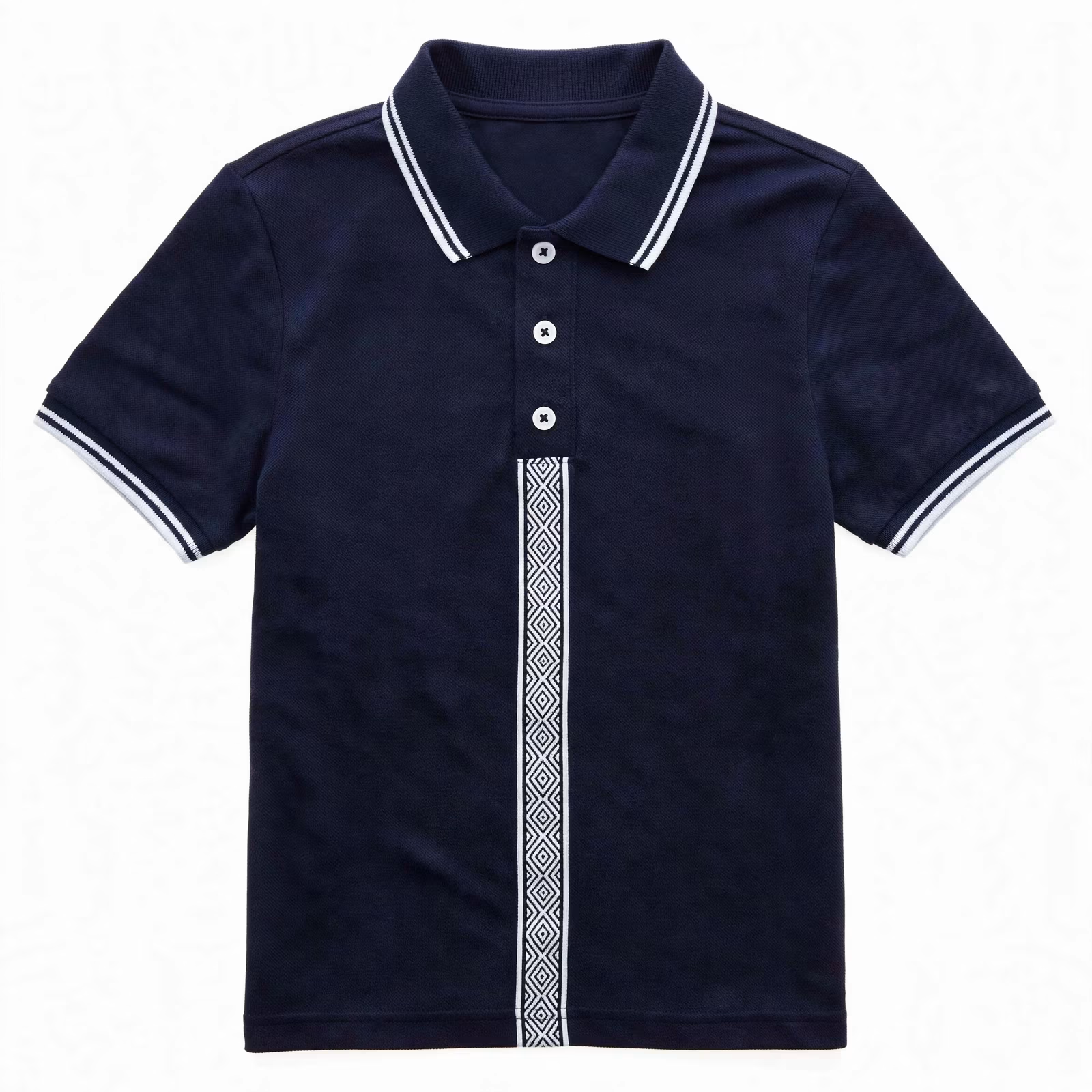
  • Men’s Navy Pique Polo Shirt with White Tipping and Jacquard Placket Stripe

    Men’s Navy Pique Polo Shirt with White Tipping and Jacquard Placket Stripe

    Polo Shirt Overview

    The tipped polo is the style that carries a programme: formal enough for a corporate uniform, relaxed enough for retail, and recognisable at a glance. This men’s polo is knitted in deep navy pique with two fine white stripes tipping the collar and sleeve cuffs, a three-button placket, and a narrow white jacquard stripe woven with a diamond pattern running down the centre front below the placket – a detail taken straight from the design our buyers repeat season after season. The chest is deliberately blank, because on a programme polo the chest belongs to the customer’s crest, not ours.

    As a polo shirt manufacturer in Bangladesh, SIATEX runs this style for uniform suppliers, promotional companies, golf and hospitality programmes and retail brands. The collar and cuff tipping is knitted in, not printed, so the stripes stay sharp through the wash life of the garment, and the jacquard stripe is woven on the loom as part of the placket panel rather than applied afterwards – the three details together give a plain polo a designed, retail-grade finish at a programme price.

    Design Details

    The front is built around the placket. Three buttons close the neck, and where the placket ends, the jacquard stripe begins – a vertical band of white geometric pattern, about the width of the placket itself, running down to the hem so the eye reads one continuous designed line from collar to waist. It is the feature customers photograph and the one that separates this shirt from a plain bulk polo on a rail. Side vents at the hem keep the shirt sitting comfortably over trousers, and the back is kept completely plain: no yoke print, no lettering, nothing to date the garment.

    The back view shows the same tipping wrapping the collar, visible from behind – a small thing that matters on a uniform, where staff are seen from every side. The hem is a plain straight polo hem with twin-needle stitching, the sleeves are set in with ribbed cuffs that hold their shape, and the whole garment is cut on a regular men’s block that sits between slim fashion fits and loose promotional cuts, which is exactly where programme volume lives.

    Collar, Cuffs and Placket

    A polo stands or falls on its collar. Here the collar is a ribbed knit collar with the two white tipping stripes knitted along the edge, attached with a clean neckline seam and a taped back neck so it lies flat after washing instead of curling. The placket is reinforced with fusible interlining so the buttonholes keep their shape, and the buttons are cross-stitched, the sewing detail that stops the classic polo failure of a button dangling by one thread at the end of a season.

    Cuffs are ribbed to match the collar, with the same double white tipping, knitted with enough elastane-free recovery in the rib to grip the arm without squeezing. Collar and cuff ribs are knitted from the same dyed yarn lot as each other, and the body pique is shade-matched to them under daylight and store light before cutting, because a collar half a shade off the body is the first thing a quality inspector photographs.

    Pique Fabric

    Pique is the polo fabric for a reason: its raised woven-look knit structure lets air move, hides the texture of an undershirt or skin beneath it, and keeps a smarter face than flat jersey at the same weight. This style runs in a mid-weight cotton pique – the detail photograph shows the fine, even pique structure this programme is knitted to, with the crisp micro-texture that reads as quality in the hand. Cotton gives the breathability and hand feel corporate wearers prefer; the same style is also produced in poly-cotton pique for harder-wearing uniform use and in a lighter pique for hot-climate and golf programmes.

    Fabric is inspected for knitting faults, shade bars and weight before cutting, and colour fastness to washing, rubbing and perspiration is tested per dye lot, because a navy polo that fades unevenly at the collar is a uniform complaint waiting to happen. Shrinkage is controlled in finishing so the size a wearer is issued is the size it stays, wash after wash.

    Fit and Sizing

    The block is a regular men’s fit: room through the chest to work in, a body length that tucks in and stays tucked or wears untucked at a respectable length, and sleeves that end mid-bicep with the ribbed cuff holding them in place. Sizes run from S to 3XL on a graded chest, length and sleeve, and the same design is developed in a women’s shaped block and junior sizes where a programme dresses a whole team or family.

    Fit approval runs on a base-size sample against your size chart before grading. For uniform programmes we recommend approving the fit on the actual wearers’ size range, and size-ratio planning is part of the order discussion – a polo programme lives on getting the ratio right, because the mediums always sell out first.

    Colours, Embroidery and Branding

    Navy with white tipping is the colourway shown. The style is produced across the standard programme palette – white, black, royal, red, bottle green, grey and sky – with the tipping kept white, matched to the body, or changed to a contrast club colour. Because the collar and cuff stripes are knitted in, a two-colour combination is a yarn decision, not a print set-up, which keeps multi-colour team orders straightforward.

    Branding is where this shirt earns its keep: the blank chest takes embroidered crests, printed logos and woven badges, and embroidery is the route most uniform and corporate buyers choose for its life-of-garment durability. Sleeve embroidery, back yoke print for event programmes, private label neck prints and branded buttons are all available. An embroidery strike-off on the actual pique approves stitch density and backing before bulk, so a crest sits flat on the knit instead of puckering it.

    Production and Quality Control

    Polos run on a dedicated knit line: pique panels cut with the knit direction aligned, collar and cuff ribs attached on specialist stations, plackets set and buttonholed under template control, then buttoning, jacquard panel setting and final pressing. The jacquard stripe is aligned to the placket centre under a guide at the sewing station – a stripe two millimetres off centre is visible across a room, so alignment is an inline checkpoint, not a hope.

    Quality control checks collar symmetry, tipping alignment between collar and cuffs, placket straightness, button security and measurements on a sampling basis through the run, with a final audit on pressed garments before folding. Shade is checked garment-to-garment within each size bundle so a team’s shirts match when they stand together.

    Minimum Order and Lead Times

    Minimums are set per colourway: as a guide, a single-colour polo programme starts at a few hundred pieces, and embroidered orders carry the same structure with the embroidery set-up confirmed at sampling. Multi-colour team orders can split quantities across colourways where the total supports the yarn and dye plan, which is how most club and school programmes are placed.

    Sampling takes about one to two weeks including the embroidery strike-off; bulk lead time is quoted with fabric knitting and dyeing shown separately from sewing, because pique is knitted and dyed to order and no stock fabric is held. Repeat programmes run faster: the block, the collar rib specification and your embroidery file stay on record.

    Global Markets We Supply

    Programme polos move through every market we serve. This style ships to uniform suppliers in Belfast and Naples, to corporate wear providers around Nantes and Debrecen, to hospitality programmes in Heraklion where the pique weight is specified lighter for the climate, and to school and club outfitters in Wroclaw and Krakow who take the tipped collar as their standard team shirt. Each destination gets its own labelling, size-chart conversion and compliance checks handled at production.

    Further afield, the shirt suits North American promotional and corporate programmes around Austin and Denver, Canadian buyers served through the Toronto sales office in their own time zone, and Australian corporate wear orders out of Perth and Sydney where the polo is close to a national uniform. Production stays in Bangladesh on one export programme, with carton markings and documentation prepared per market.

    Packaging and Export

    Retail orders are folded with the collar presented, tissue and a header card where the range calls for it; uniform and corporate orders are usually polybagged individually with size marking visible, and embroidered orders are bagged after a final embroidery check so no shirt ships with a loose thread on the crest. Cartons are sorted by colourway and size ratio for direct allocation to stores or depots.

    Ordering is inquiry-based: send your colours, sizes, quantities and logo artwork and the merchandising team replies with pricing, the sampling steps including your embroidery strike-off, and a production timeline. It is a simple shirt done properly, which is why programmes stay on it for years.

    Frequently Asked Questions

    Q: Can we put our logo on the chest?

    Yes – the chest is blank for your branding. Embroidery is the most popular route for its durability, and print and woven badges are also available. An embroidery strike-off on the actual fabric approves the design before bulk production.

    Q: Are the collar stripes printed or knitted?

    Knitted in. The white tipping on the collar and cuffs is part of the rib knit itself, so it cannot crack, peel or fade away from the body colour, and it survives the full wash life of the shirt.

    Q: What fabric weights can we choose?

    A mid-weight cotton pique is standard; lighter pique for hot climates and golf, and poly-cotton pique for heavy-duty uniform use, run on the same pattern. Swatches are sent for approval at sampling.

    Q: Can the polo be made in our team colours?

    Yes – body, collar tipping and jacquard stripe colours follow your colour cards. Two-colour combinations are a yarn decision at knitting, so team and club colourways are straightforward to produce.

    Q: What sizes are available?

    Men’s S to 3XL as standard, with women’s and junior blocks developed from the same design for full-team and family programmes.

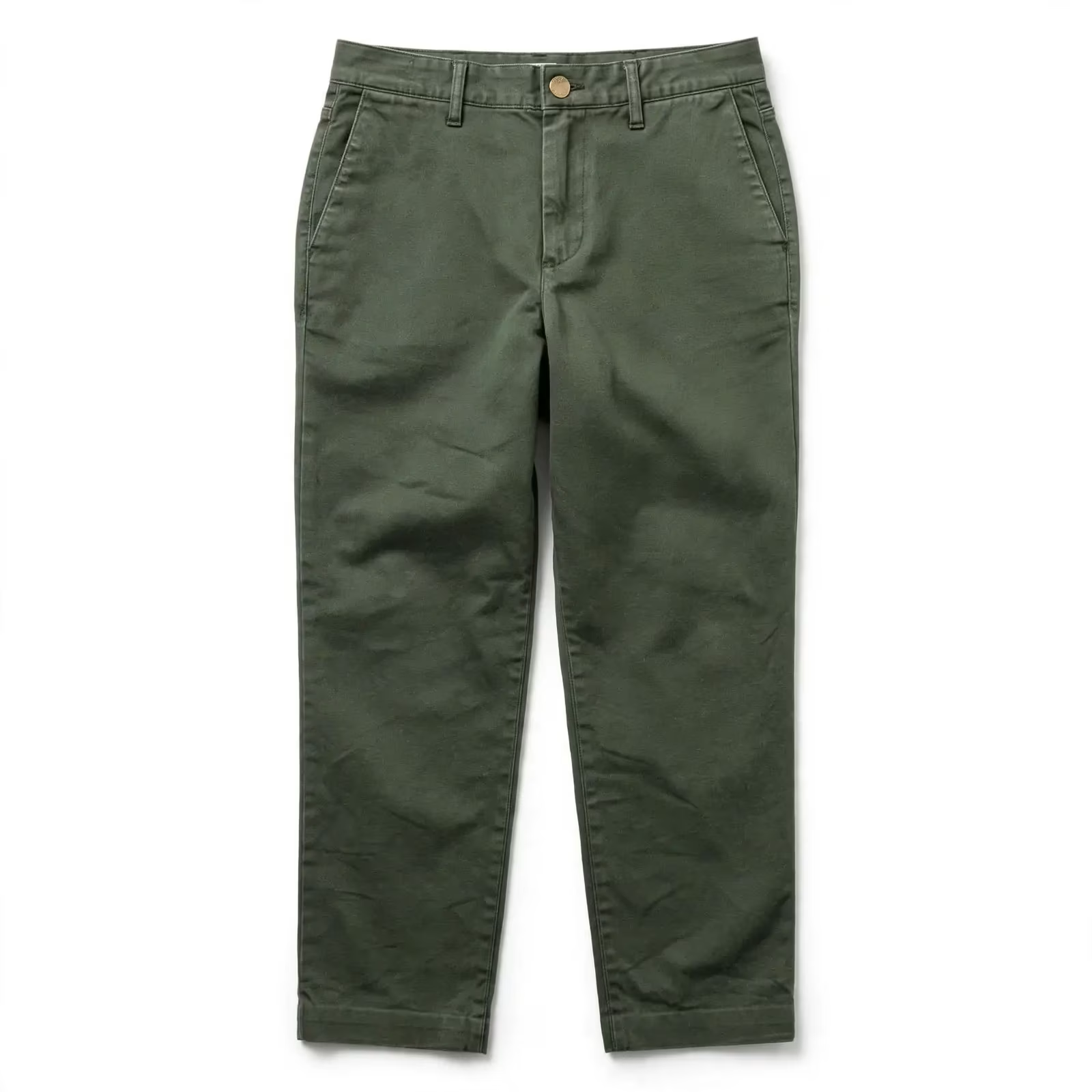
  • Women’s Olive Green Chino Trousers with Gold Button and Slash Pockets

    Women’s Olive Green Chino Trousers with Gold Button and Slash Pockets

    Chino Trousers Overview

    The chino is the hardest-working trouser in a women’s range: smart enough for a uniform programme, relaxed enough for weekend retail, and simple enough in construction to hold its price point season after season. This pair is cut in a deep olive green cotton twill with a straight leg, a mid-rise waist and the classic chino details – a gold-tone button at the waist, slanted slash pockets at the front and two welt pockets at the back – finished with a garment wash that softens the twill and settles the colour before the trouser ever reaches a store rail.

    As a chino trousers manufacturer in Bangladesh, SIATEX produces this style for fashion retailers, catalogue brands and uniform suppliers who need one dependable trouser block across many colourways. The pattern is a proven everyday fit rather than a fashion extreme, which is exactly why it repeats: buyers reorder the same block in new colours instead of gambling on a new shape each season, and the production line runs it with the consistency that repeat orders demand.

    Front Design Details

    The front sits flat and clean: a waistband with belt loops all round, a zip fly closed by a single round gold-tone metal button, and slash pockets set at a slant so the hand slides in naturally and the pocket mouth follows the hip line. The topstitching runs in self-colour thread along the fly, pockets and waistband, keeping the finish quiet and tailored rather than sporty. There is no pleat – the front is flat, which suits both a tucked blouse on a uniform programme and a knit top on a retail range.

    The leg is straight from knee to hem with no taper and no flare, the cut that photographs honestly and fits the widest range of customers. Hems are plain and deep enough to turn up, and the inside of the waistband can carry a printed size-and-brand panel or a woven label, as your programme specifies. The detail photograph shows the waistband area at full size: the button, the fly stitching and the twill weave are the quality cues a buyer checks first, and they are finished to be looked at closely.

    Back Design and Pockets

    The back is shaped with a yoke seam that runs across the seat and gives the trouser its fit through the hip without darts showing on the outside. Two welt pockets sit below the yoke, one on each side – single-lip welts with clean corners, deep enough for a card or a phone on a uniform version, and often left as a styled detail on fashion orders. A centre back belt loop keeps a belt sitting level, and the seat seam is felled for strength at the point of most stress.

    Pocket bags are made from the same twill on the fashion version or from a lighter pocketing fabric where a smoother front is wanted; either way the bags are bar-tacked at the stress points so they survive real use, not just the fitting room. On uniform programmes the back pockets can be closed with a button or a hidden snap, a small change made at pattern stage.

    Cotton Twill Fabric

    Chino lives or dies by its twill. This style uses a mid-weight cotton twill with the fine diagonal weave visible in the detail view – dense enough to hold the leg’s line and stay opaque, light enough to wear through spring and summer. Cotton gives the trouser its natural hand feel and breathability; where a programme needs easier care or a closer fit, the same pattern runs in a cotton-elastane stretch twill or a poly-cotton twill, and the fabric choice is confirmed with hand-feel swatches before sampling.

    Every colourway is garment-washed after sewing. The wash softens the cloth, removes the stiffness of new twill, pre-shrinks the trouser so the leg length a customer buys is the length it stays, and gives the olive its settled, slightly lived-in tone rather than a harsh new-dye brightness. Colour fastness to washing and rubbing is tested per batch, because a chino that fades at the knee in a month comes back as a return, not a reorder.

    Fit, Sizing and Lengths

    The fit is a regular straight leg on a mid-rise waist: shaped enough through the hip to avoid the boxy look of a men’s block borrowed for women, straight enough through the leg to sit over a shoe without pooling. Sizes run from 6 to 20 with a graded waist, hip and rise, and two leg lengths – regular and long – cover most retail size charts; a petite length can be added to the grade where a retailer’s chart calls for it.

    Fit is approved on a base-size sample measured against your size chart before grading, and the same block can be graded into a plus-size extension or adapted to a maternity waistband for specialist programmes. Because the pattern is a standing block, repeat orders fit identically to the first – the detail uniform buyers and catalogue retailers care about most.

    Colours and Customisation

    Olive green is the colourway shown, photographed alongside the beige version in the reference range; the style is produced across the classic chino palette – beige, khaki, sand, stone, navy and black – and in seasonal fashion colours where quantities allow the dye lots. Trousers are one of the styles where our buyers do use navy and black heavily, and the twill takes both with the same garment-washed finish.

    Customisation covers private label waistband printing or woven labels, embroidered logos for uniform programmes, branded buttons and rivets in place of the gold-tone standard, and retail packaging from simple polybags to folded-and-banded presentation. A workwear version adds reinforced knees and extra bar-tacking; a fashion version can add a cropped length or a turn-up hem from the same block.

    Production and Quality Control

    Trouser production is a dedicated woven line: cutting with the twill grain aligned so legs never twist, waistband and fly setting on specialised stations, pocket welts formed and pressed before the seat is closed, then hemming, buttoning and the garment wash before final pressing. Leg twist is the classic chino fault, so grain alignment is checked at the cutting table and again on the finished garment – a trouser that spirals after washing is rejected at final audit, not shipped.

    Quality control runs inline at each operation and as a final audit on washed, pressed garments: measurements against the size chart, stitch density, button pull strength, zip function, shade consistency within the colourway, and a check that front and back pocket placement mirror exactly. Cartons are packed by size ratio so a store receives a sellable spread in every box.

    Minimum Order and Lead Times

    Minimums are quoted per colourway and fabric: as a guide, a single-colourway chino programme starts at several hundred pieces, and multi-colourway orders can split across the palette where the total supports the fabric booking. Uniform and workwear programmes with embroidered branding follow the same structure, with the embroidery set-up confirmed at sampling.

    Sampling takes about one to two weeks from fabric confirmation; because no fabric is held in stock, bulk lead time is quoted with the fabric sourcing shown separately from cutting and sewing. On repeat orders the block, markers, wash recipe and colour standards are already on file, which shortens both sampling and production – one reason this style anchors long-running programmes.

    Global Markets We Supply

    Chinos sell everywhere trousers are worn, and this style ships to fashion retailers and uniform suppliers across a wide map: to Porto and Marseille for southern European catalogue ranges, to Ghent and Gothenburg for northern retail chains, to Malaga holiday and hospitality uniform programmes, and to Poznan and Sheffield where value retailers move trousers in serious volume. Each market takes the same block with its own size chart conversion, labelling language and test requirements applied at production.

    Beyond Europe, the trouser suits North American catalogue and workwear buyers who reorder by the season, Australian retailers whose summer runs through the European winter, and Middle East uniform programmes that need light twill in large size spreads. The Toronto sales office supports North American buyers in their own time zone while production stays in Bangladesh, and export documentation is prepared per destination so cartons clear without relabelling at arrival.

    Packaging and Export

    Retail orders are folded flat with tissue and banding or packed on hangers, as the range requires; uniform orders are usually polybagged individually with size marking visible for warehouse issue. Every pair carries your care label, size label and barcode, and cartons are marked by colourway and size ratio for direct store allocation.

    Ordering runs on an inquiry basis: send the colours, sizes and quantities you are planning and the merchandising team replies with pricing, a sampling schedule and a production timeline. One dependable trouser block, run properly, is the kind of line that quietly carries a range – this is the one our buyers build on.

    Frequently Asked Questions

    Q: What fabric are the chinos made from?

    A mid-weight cotton twill with a garment wash for softness and pre-shrinking. Stretch twill with elastane and poly-cotton twill are available on the same pattern where your programme prefers them.

    Q: Can the trousers be made in other colours?

    Yes – beige, khaki, sand, stone, navy and black are standard chino colourways, and seasonal colours can be dyed where quantities support the dye lot. Olive green is the colourway photographed.

    Q: Do the chinos come in different leg lengths?

    Regular and long lengths are standard in the grade, and a petite length can be added. Sizes run from 6 to 20, with plus-size grading available on request.

    Q: Can we add our branding?

    Yes – private label waistband printing or woven labels, embroidered logos for uniform orders, branded buttons and your retail packaging are all handled in production.

    Q: How are the trousers packed for shipping?

    Folded with tissue and banding, on hangers, or individually polybagged for uniform issue – with your labels and barcodes, in cartons sorted by colourway and size ratio.

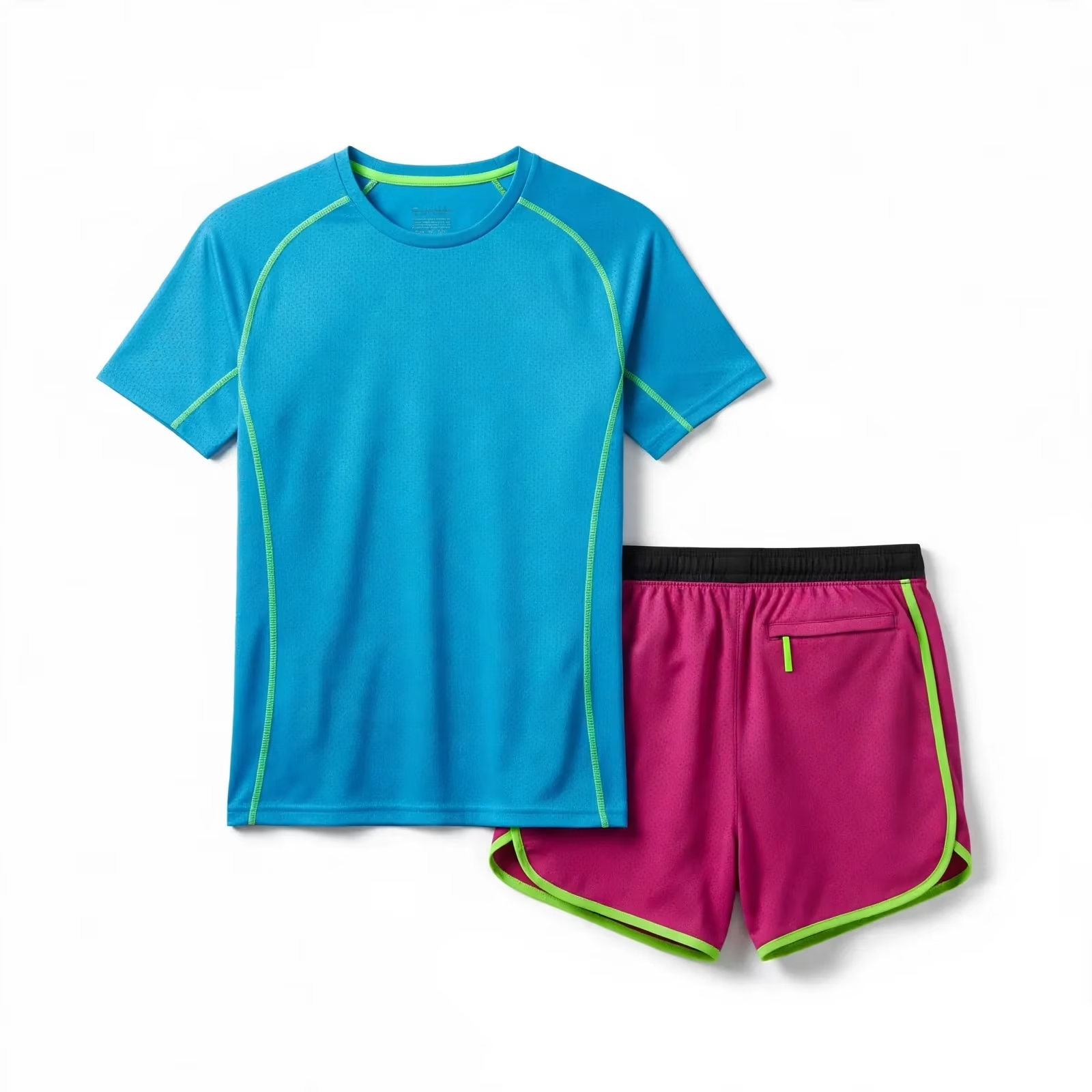
  • Women’s Two-Piece Running Set in Turquoise and Magenta with Mesh Tee and Zip-Pocket Shorts

    Women’s Two-Piece Running Set in Turquoise and Magenta with Mesh Tee and Zip-Pocket Shorts

    Running Set Overview

    This two-piece running set pairs a short-sleeve mesh tee in bright turquoise with running shorts in deep magenta, built as one coordinated outfit for training, race days and club programmes. The tee uses raglan sleeves so the shoulder moves freely without a seam sitting on top of the joint, and every seam on both pieces is finished with flatlock stitching in neon lime, a contrast thread that is functional first – flat seams do not chafe on long runs – and gives the set its sharp, technical look second.

    As a running set manufacturer in Bangladesh, SIATEX produces coordinated activewear sets like this one for sports brands, event organisers and retail chains that need the top and bottom to arrive matched in colour, sizing and packaging. The set is sold as a unit but graded as two garments, so the tee fit and the shorts fit are each developed properly rather than one being an afterthought, and both pieces carry the same dye-lot discipline so the colours stay true across a full production run.

    Tee Design Details

    The tee is cut from open athletic mesh with a round crew neckline bound in self fabric, short raglan sleeves and a straight hem that sits at the hip. The neon lime flatlock runs along the raglan lines, down the side seams and around the hem and sleeve openings, mapping the construction of the garment in contrast thread. The chest is kept clean and free of branding on this sample, ready for a club crest, sponsor print or event logo exactly where your artwork places it.

    The back view shows the same raglan construction continuing across the shoulders, with the mesh running uninterrupted for maximum airflow where the body heats up most. A small reflective transfer can be added at the back yoke or hem for low-light visibility on request, a detail many running clubs and night-event organisers ask for, and the neckline can be changed to a V-neck or a shallow scoop on a custom pattern.

    Shorts Design Details

    The shorts are a classic runner’s cut in magenta woven polyester: short leg, curved hem with side vents for stride length, and contrast neon binding tracing the hem and side stripe to match the stitching on the tee. The waistband is a wide black elastic that sits flat and holds through a run without a drawcord digging in, and an internal drawcord can be added where your market prefers one.

    At the back, a zip pocket sits on the yoke with a neon green puller – sized for a key, card or energy gel and positioned so it does not bounce against the body. The pocket is one of the details buyers ask about most on running shorts, because it is the feature the end runner photographs and reviews. An inner brief liner in mesh can be built in or left out to your specification, and the leg length can be adjusted from race-short to a longer training cut.

    Fabric and Mesh Construction

    The tee fabric is a lightweight polyester athletic mesh: an open knit structure that lets air pass through the garment itself, moves sweat off the skin and dries fast between sessions. Polyester holds the turquoise colour through repeated washing without the fading cotton shows, and the mesh is knitted with enough density to stay opaque across the body while the open structure does the ventilating. Buyers can raise or lower the mesh openness and the fabric weight to suit a summer race series or a cooler-climate training range.

    The shorts use a light woven polyester with a smooth face that does not cling when wet and a mechanical give in the weave that follows the stride without elastane. Flatlock seams on the tee are stitched with the contrast neon thread as standard on this design; the same construction can be run in self-colour thread for a quieter retail look. Every fabric is checked for colour fastness, shrinkage and seam strength before bulk cutting, and a lab-dip and strike-off stage approves colour and print before production begins.

    Fit, Sizing and Grading

    The set is graded as a women’s running fit: the tee follows the body without compression, with room through the chest and a hem that stays in place over the shorts waistband, and the shorts sit at the natural waist with a leg opening wide enough for a full stride. Sizes run from XS to 3XL, graded as a matched set so a size medium tee and a size medium shorts are developed against the same body measurements, and mixed-size set packing is available for retail programmes that sell the two pieces under one barcode.

    Fit samples are made first in your base size and measured against your size chart before grading, and the set can equally be developed in a men’s or unisex block, or as separates, where a programme needs the tee for one event and the shorts for another. Tall and petite length options on the shorts are a simple pattern adjustment at development stage.

    Colours, Print and Branding Options

    Turquoise with magenta is the colourway shown; the set can be produced in your team’s or retailer’s colours, with the flatlock stitching and binding kept in neon contrast or matched to the body. Colour blocking between the tee, the shorts, the waistband and the binding gives a wide design space from one pattern – a club can run its home and away colourways from the same blocks with only the dye and thread cards changed.

    Branding routes include chest prints by screen print or heat transfer, embroidered crests, reflective logos for night visibility, woven hem labels and printed size markings inside the neck. Because the tee chest is blank on this design, artwork placement is entirely yours; our sampling team produces a printed strike-off for approval so position, size and colour are locked before bulk.

    Production and Quality Control

    Production runs in Bangladesh through a controlled sequence: fabric inspection on arrival, marker making and cutting, flatlock and overlock sewing lines for the tee, separate woven lines for the shorts, then pocket zips, binding and waistband attachment before the two pieces are matched into sets. Inline checks run at each stage, with seam strength, stitch density and measurement checks on a sampling basis through the run, and a final audit on finished sets before packing – both pieces together, so a set never ships with mismatched sizes or shades.

    Shade matching between the mesh tee and the woven shorts deserves its own note: two different fabric types take dye differently, so the lab works both to the same colour standard under daylight and store lighting checks, and set matching is verified again at packing. Needle detection, button and zip pull tests, and carton-level checks complete the export routine.

    Minimum Order and Lead Times

    Minimums are set per style and colourway rather than as one blanket figure – as a guide, a two-piece set programme in a single colourway starts at a few hundred sets, with the exact minimum confirmed against your fabric choice and size ratio at quotation stage. Mixed colourways inside one order are possible where total quantities support the dye lots, which suits event programmes that need several club colours at once.

    Sampling normally takes one to two weeks from artwork and fabric confirmation, and bulk production follows the fabric booking: mesh and woven fabrics are sourced at order stage because no stock is held, so lead times are quoted honestly per order with the fabric timeline shown separately from the sewing timeline. Repeat orders on approved blocks run faster, as patterns, markers and colour standards are already on file.

    Global Markets We Supply

    Running participation keeps growing across Europe and North America, and with it the demand for coordinated sets that look like a team kit rather than two unrelated garments. This set ships to running clubs and event companies around Vienna, Dublin, Lisbon and Helsinki, to sports retailers in Stockholm, Rome and Cardiff, and to race organisers whose participant tees and shorts need to match across thousands of finishers.

    In North America the set suits marathon and fun-run programmes in San Francisco, Portland, Charlotte and Minneapolis, plus Canadian club orders around Ottawa and Edmonton where the sales office in Toronto supports communication in the buyer’s time zone. Australian demand comes from Brisbane and Adelaide running communities that train through warm evenings and need the mesh weight kept light, while Hong Kong buyers use the set for corporate wellness runs; production stays in Bangladesh and ships worldwide under one export programme, with sizes, labelling and test standards adjusted to each market’s rules.

    Packaging and Export

    Sets are folded together and packed as one unit, tee and shorts size-matched, in a single polybag with your barcode and care labels, or packed as separates where a retailer sells the pieces individually. Retail programmes can specify hangers, header cards and printed event packaging; club programmes usually take simple branded bags with size sorting by team list. Cartons are marked by colourway and size ratio for warehouse intake.

    Export runs from Bangladesh with full documentation, and orders are handled on an inquiry basis: send your colours, quantities and artwork through the inquiry system and the merchandising team replies with pricing, sampling steps and a production timeline for your programme.

    Frequently Asked Questions

    Q: Can the set be made in our club colours?

    Yes. The tee, shorts, waistband and binding colours all follow your colour cards, and the flatlock stitching can stay neon contrast or match the body. Both fabrics are lab-dipped to the same standard so the set matches across fabric types.

    Q: Is the chest print included in production?

    The sample chest is blank for your artwork. Screen print, heat transfer, reflective print and embroidery are all available, and a strike-off sample approves size, position and colour before bulk production starts.

    Q: Does the shorts pocket fit a phone?

    The back zip pocket is sized for a key, card or gel, which is what most runners carry on the move. A larger phone-sized pocket can be developed into the waistband or side seam at sampling stage if your programme needs it.

    Q: What sizes does the set come in?

    Women’s XS to 3XL as standard, graded as a matched set. Men’s and unisex blocks, junior sizes and tall or petite short lengths can be developed from the same design.

    Q: How are the two pieces packed?

    As one size-matched set in a single bag with your labels and barcodes, or as separates if your store sells them individually. Cartons are sorted by colourway and size ratio.

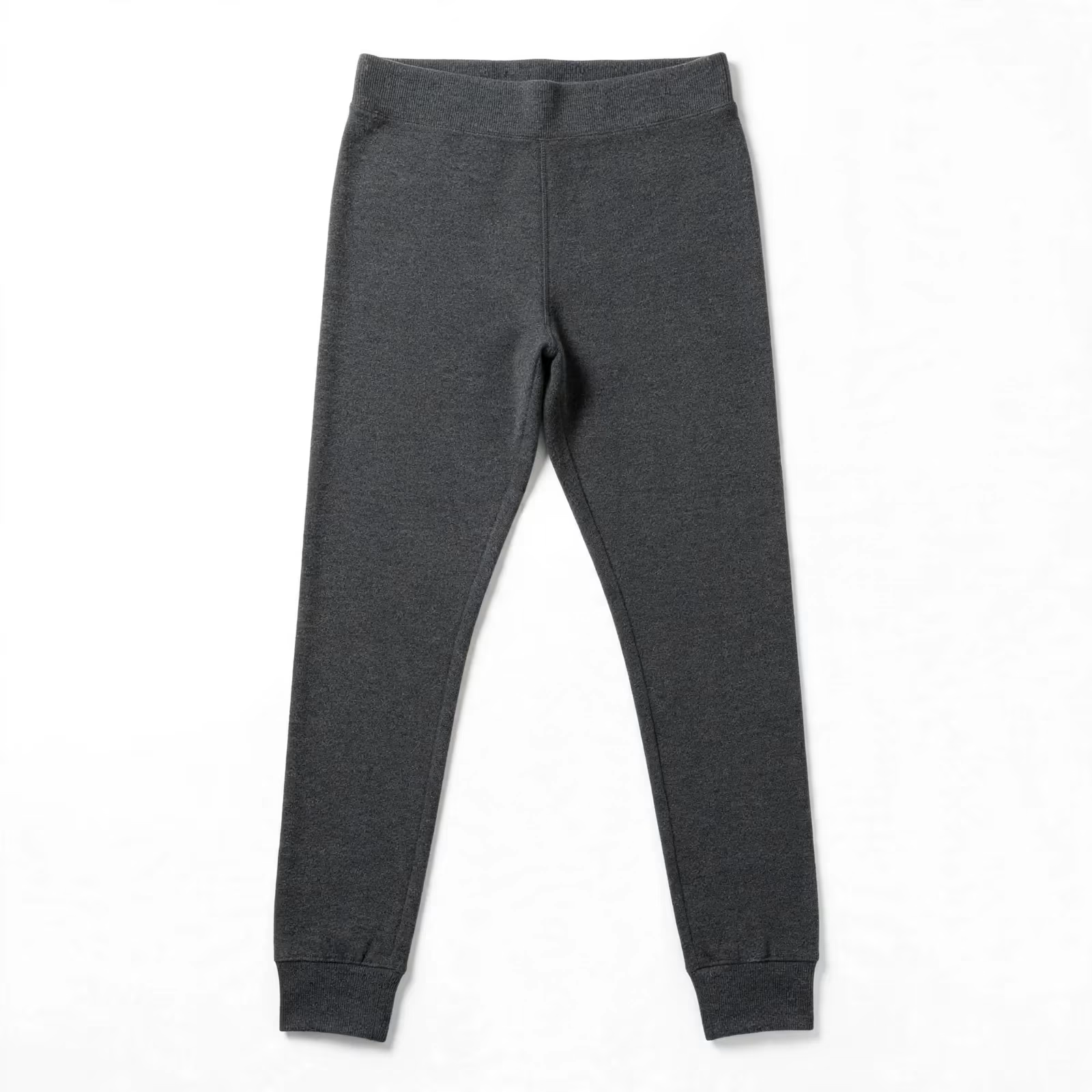
  • Women’s Brushed Leggings in Charcoal Heather with Cuffed Ankles

    Women’s Brushed Leggings in Charcoal Heather with Cuffed Ankles

    A winter-weight legging with a softly brushed inside that feels warm the moment it goes on – fully opaque, shown in charcoal heather.

    Made to order in Bangladesh for European importers and retail brands, in your colours, lengths and labelling, sizes XS to 3XL.

    Leggings Manufacturer in Bangladesh for Winter Knit Programmes

    SIATEX manufactures this brushed legging in Bangladesh for importers and retailers whose basics business turns on dependable winter volume. As a leggings manufacturer we treat the style with the seriousness its sales deserve: knit construction, brushing level, opacity and elastic recovery are all specified and tested, because a legging is judged in the first wear – warm or not, opaque or not, still fitting at Christmas or bagged out by November.

    The design is the classic cold-weather legging in charcoal heather: full length, a wide elastic waistband that sits flat and stays up, plain seamless-look legs and ribbed ankle cuffs that hold the hem in boots. The inside face is brushed – the knit is raised into a soft, warm pile that traps heat against the leg – while the outside stays smooth and neat. It is the pair European customers buy in multiples every autumn, and the pair that fails cheapest when it is made carelessly. Retailers tell us it is frequently the highest unit-volume line in their entire winter department.

    A Waistband That Stays Up and Cuffs That Stay Put

    Two details decide whether a legging gets worn daily or pushed to the back of the drawer. The first is the waistband: ours is a wide band with quality elastic fully enclosed and cover-stitched, sized so it holds through a day of movement without digging – the stitching and knit at the band are visible in the detail view. The second is the ankle: ribbed cuffs in self fabric grip gently above the ankle bone, keep the leg from riding up inside boots, and give the garment a finished, deliberate look that plain hemmed leggings lack.

    Construction elsewhere is equally considered. The gusset and rise are patterned for sitting and bending without the waistband sliding, seams are flat and soft against the skin, and the knit is dense enough that the leg stays fully opaque at full stretch – the test cheap leggings fail in store lighting. Every size is stretch-tested on frames, not just measured flat on a table.

    Brushed Knits, Weights and Warmth Levels

    The fabric is a cotton-rich stretch knit with the inside face mechanically brushed to raise the warm pile you can see in the folded view – soft loops of fibre across the whole inner surface. As a brushed leggings supplier we build the same pattern across warmth levels:

    • Light brushed knit for transitional autumn wear and layering
    • Standard brushed weight – the style shown here, for everyday winter
    • Heavy fleece-backed knit for cold-climate and outdoor programmes
    • Unbrushed cotton and performance knits for spring and active ranges

    Brushing is controlled like any other process: pile height and evenness are checked across the roll, because over-brushing weakens the knit and under-brushing cheats the customer of the warmth she paid for. Opacity, stretch recovery and pilling are tested per fabric lot, and shrinkage is set at finishing so the size she buys is the size after washing.

    Colours, Lengths and Private Label

    Charcoal heather anchors the range, and heather knits in grey, navy, burgundy and black marle run beside solid colours dyed to your standards – heathers hide wear beautifully, which is part of why they lead European winter basics. Lengths come full, three-quarter and capri from the same block, and kids sizes match the women’s pattern for family basics programmes.

    Private label is complete: woven or printed waistband branding, your size and care labels, hangtags, and retail-ready packaging from simple polybags to boxed multipacks of two or three pairs – multipacks are where this style earns its best margins in French and German retail. Prints and jacquard textures run on the same construction for fashion-led ranges, sampled on your artwork.

    Exporting Brushed Leggings to France, Germany and Worldwide

    European importers anchor this programme. French clothing importers take heather multipacks for national retail, German buyers order the standard brushed weight for their winter basics, Polish buyers take the heavy fleece-backed weight for colder markets, and Spanish buyers order autumn and winter multipacks for department stores. UK retailers take charcoal and navy as their core winter line, with burgundy and black marle as the seasonal colour stories.

    Beyond Europe, Canadian importers take the heavy fleece weight for prairie winters, Scandinavian buyers take the standard weight for everyday winter, and Australian buyers order the light brushed weight for autumn layering. US buyers take the style for winter basics programmes, while Japanese buyers order it for their winter knit ranges.

    Brushed basics follow the cold. Paris, Lyon and Lille hosiery buyers take heather multipacks for national retail, and German buyers in Hamburg, Munich and Berlin order the standard brushed weight for winter basics. In Poland, Warsaw buyers take the heavy fleece-backed weight for colder markets, and in Spain, Madrid and Barcelona buyers order autumn and winter multipacks for department stores. In the United Kingdom, London and Manchester retailers take charcoal and navy as their core winter line, and in Canada, Toronto and Vancouver importers take the heavy fleece weight for prairie winters. In Australia, Sydney and Melbourne buyers order the light brushed weight for autumn layering, and in Japan, Tokyo buyers order it for their winter knit ranges. As a wholesale leggings manufacturer, the point is a legging that stays warm, stays opaque and stays up, in every market it sells in.

    Production, Quality Control and Ordering

    Production runs through partner factories in Bangladesh on knitting, brushing and sewing lines organised for basics volume – with inline checks at every stage, and a final inspection of measurements, opacity, stretch recovery and packing before cartons close.

    Ordering is inquiry-based. Tell us the weight and warmth level, colours and lengths, sizes and packing plan – we return a price for the complete programme, including labelling and packing. Sampling comes first so you can check the brushing, the opacity and the fit; bulk production follows your approval, with lead times confirmed in writing before you commit.

    For the end customer this is an easy garment to own: the brushed inside stays soft wash after wash, the waistband stays up, the cuffs stay put, and the colour stays true. That is why the same style keeps reordering, season after season.

    Why Basics Buyers Produce Leggings with SIATEX

    Basics punish inconsistency more than any fashion style, because the customer compares this year’s pair with last year’s pair. Our model is one accountable partner for the whole garment: one knit standard, one brushing level, one opacity test, and a Toronto sales office working North American and European hours while production runs in Bangladesh. The result is a legging that stays warm, stays opaque and stays up.

    Layering, Thermals and the Wider Basics Range

    Brushed leggings rarely sell alone. Retailers merchandise them as the base of a winter system – thermal tops, long-sleeve tees, fleece-lined tights, and this legging as the bottom layer – so a buyer can order a three-piece brushed set at one price point. The same construction runs in kids sizes, so a family basics programme can run across women’s and children’s departments from the same knit and colour plan.

    The style also steps sideways into neighbouring categories without new development: add a skirt overlay and it becomes a skegging, raise the brushing and add a drawcord and it reads as a lounge jogger, or cut it at capri length for spring. One block, many selling stories – the kind of flexibility that keeps a basics programme profitable.

    Frequently Asked Questions

    Are these leggings fully opaque?

    Yes. The knit density is specified and stretch-tested on frames in every size and every colour, so the leg stays fully opaque at full stretch.

    What warmth levels can you produce?

    Light brushed for autumn layering, standard brushed for everyday winter as shown, and heavy fleece-backed for cold-climate and outdoor programmes.

    Which countries do you export leggings to?

    Regular programmes run to France, Germany, Poland, Spain and the United Kingdom, with further buyers in Canada, the United States, Australia and Japan.

    Can you pack multipacks for retail?

    Yes – boxed or banded two and three-pair packs in mixed or single colours, with your branding, barcodes and carton marking.

    Do you make matching kids sizes?

    Yes. The same brushed construction is graded for children, so a retailer can run one family basics programme across women’s and children’s departments.

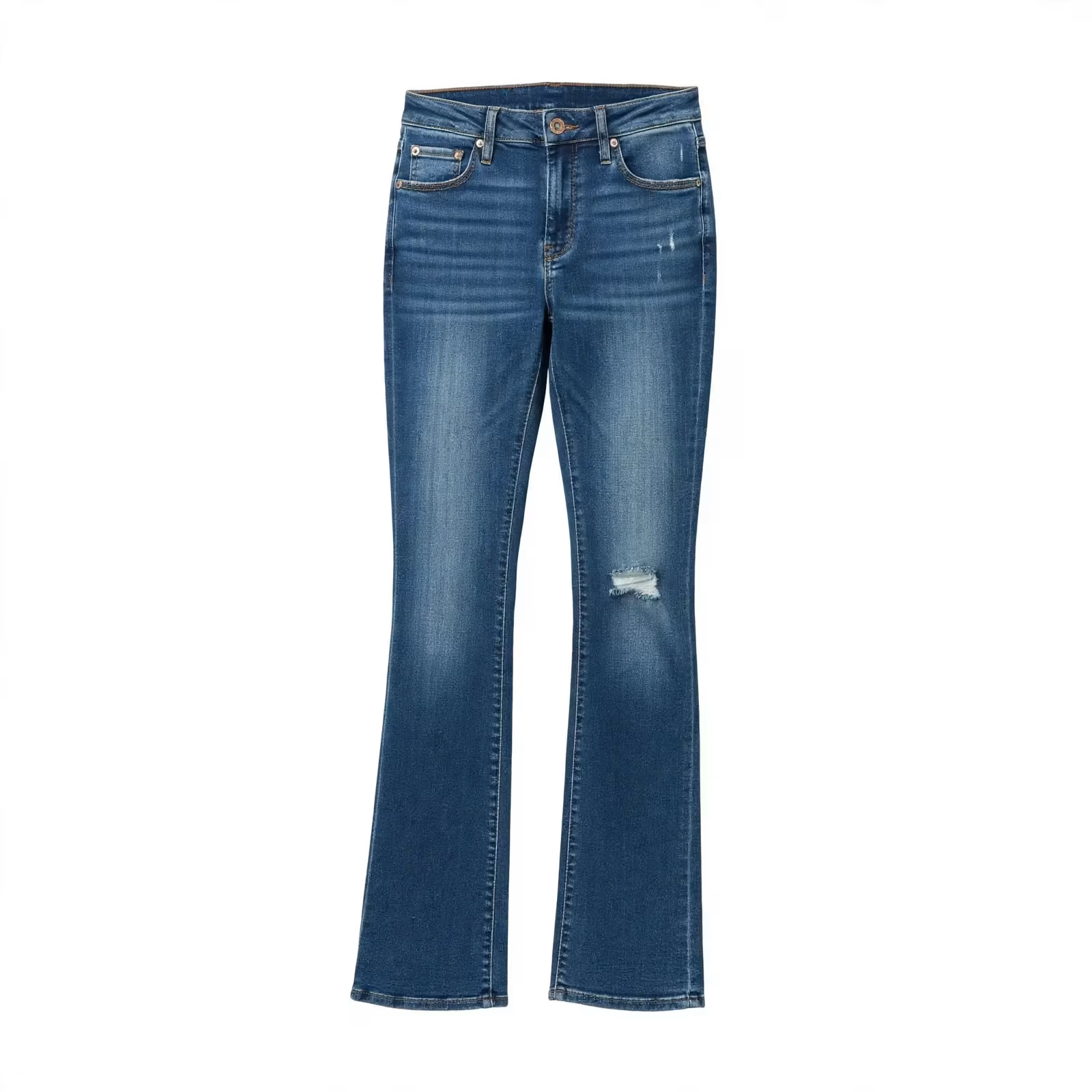
  • Women’s Bootcut Jeans in Mid-Blue Stonewash with Knee Rip

    Women’s Bootcut Jeans in Mid-Blue Stonewash with Knee Rip

    The five-pocket bootcut in a lived-in mid-blue wash – whiskers, fading and one clean knee rip – cut slim to the knee and flared to sit over boots.

    Made to order in Bangladesh for denim brands and importers, in your wash library, fits and branding, waist sizes 24 to 36.

    Jeans Manufacturer in Bangladesh for Washed Denim Programmes

    SIATEX manufactures this bootcut jean in Bangladesh for importers and brands whose business is wash-driven. As a jeans manufacturer we run denim as a complete system – fabric, fit, sewing, washing and finishing under one specification – because a jean is only ever as good as its wash, and a wash only repeats when every step before it is controlled. The mid-blue stonewash on this page is one recipe from a working library; the same bootcut block runs from dark indigo through black to coloured denim.

    The fit is the classic women’s bootcut: mid-rise, slim through hip and thigh, fitted to the knee, then a gentle flare to the hem that balances boots and heels. Five pockets, a copper button and rivets, contrast tan stitching and a zip fly complete the standard. The wash shown here adds hand-sanded whiskers and fading with one placed rip at the knee – distressing that is drawn on the pattern, measured, and repeated pair after pair instead of left to whoever holds the abrasive that day.

    Five-Pocket Construction and a Flare That Sits Right

    Denim construction is heavy work, and the seams show it: felled outseams for strength, chain-stitched hems that wear in rather than wear out, bartacked pocket corners, and rivets at the main stress points. The flat lay shows the front construction clearly – the same clean front customers see in a shop, with pocketing that stays put and a fly that lies flat.

    The bootcut flare is engineered, not guessed: the knee position and hem opening are graded per size, so the 24 and the 36 keep the same line over a boot, and one back pocket is cut on the straight of the grain so the line stays true after washing. That is why the back view looks calm instead of busy: the yoke and the back pockets sit exactly where they are designed to sit.

    Denim Weights, Stretch and Wash Recipes

    The fabric here is a mid-weight stretch denim – cotton with a touch of elastane for movement that recovers after a day of wear, and a hand that feels substantial without feeling heavy. The same bootcut pattern runs across these denim choices:

    • Rigid 100 percent cotton denim for authentic vintage washes
    • Comfort stretch for everyday fits – the cloth shown here
    • High-stretch for skinny and jegging-adjacent programmes
    • Heavier denim for workwear-influenced and winter lines

    Washing is where Bangladesh earns its reputation on denim. Stonewash, enzyme wash, bleach and tint recipes sit in the same laundry library, with washing controlled by the recipe card and the wash sample retained as the standard, so the fourth container of the mid-blue looks like the first.

    Your Wash Library, Distressing and Branding

    Send a wash target – a physical pair, a photograph, or a recipe from your library – and our laundry works it back into a repeatable recipe. The mid-blue on this page carries its own combination of whiskers and lacquer fading, but a buyer can order the same bootcut in a dark indigo that reads like raw denim until the first wash, a light ice-blue for summer, or a black that stays black through repeated washing.

    Branding is fully yours: leather or vegan back patches with your logo, woven waistband labels, printed pocket bags, custom buttons and rivets with your mark, hangtags and barcoded stickers. Sizes run waist 24 to 36 with regular, long and short inseams, and curved-waist and plus grading extend the same block. Mixed-wash orders are routine – one fit, three washes, one shipment – because the wash library holds each recipe separately.

    Exporting Bootcut Jeans to the USA and Worldwide

    The United States takes the largest share of this style – bootcut is a permanent line for American denim brands, Western and workwear retailers, and online labels that restock core washes every season. The United Kingdom and Germany buy the same block in darker, cleaner washes for high-street programmes, while the Netherlands and Belgium favour the distressed versions for boutique retail. Canada orders comfort-stretch for its core range, and Australian importers run the fit in lighter denim for their climate.

    Importers in Spain and Poland take fashion washes on shorter cycles, and Middle East buyers in the UAE and Saudi Arabia order it for retail programmes, while buyers in Japan value the clean, precise construction and the way the wash is held to a recipe. We also ship to buyers in the Gulf states, where bootcut jeans are sold through the year, and to distributors in South Korea who value the stretch and recovery of the fabric.

    Denim has its own heartlands. Dallas and Nashville anchor the bootcut’s American business, with Los Angeles buyers ordering fashion washes for their denim lines and New York buyers taking the style for premium retail. In the United Kingdom, London and Manchester high-street buyers order the same block in darker, cleaner washes, while in Germany, Berlin and Hamburg buyers take it for their denim programmes. Canadian buyers in Toronto and Vancouver order comfort-stretch for their core range, and in Australia, Sydney and Melbourne importers run the fit in lighter denim. In Japan, Tokyo and Osaka buyers value the clean construction and the wash held to a recipe. As a wholesale jeans manufacturer, the point is a jean that fits the same, washes the same and sells the same, in every market it sells in.

    Production, Wash Control and Ordering

    Production runs through partner factories in Bangladesh with in-house or dedicated laundry capacity, so the wash is controlled in the same system as the sewing. Every container is checked against the retained wash sample before it ships, and the laundry holds the recipe so the fourth container matches the first.

    Ordering is inquiry-based. Send your fit reference or tech pack, the wash target, sizes and inseams – we return a price for the complete programme, including wash development, labelling and packing. Sampling comes first so you can check the wash and the fit; bulk production follows your approval, with lead times confirmed in writing before you commit.

    For the end customer, stretch denim like this asks little: wash inside out, dry away from harsh sun, and the colour and the rip stay as designed – the small care habits that keep a jean looking like the pair a customer fell for in the shop.

    Why Denim Buyers Produce Jeans with SIATEX

    Jeans fail in repeat, not in samples – the sample is always right. Buyers stay with us because our laundry holds the recipe, our sewing holds the block, and the fourth container matches the first. A denim programme is a system, and we run the whole system – fabric, fit, wash and packing – under one accountable contact, with a Toronto sales office working North American and European hours while production runs in Bangladesh. That is the whole point of a made-to-order denim factory in Bangladesh.

    Rise, Inseams and Range Planning

    The block shown here is a mid-rise, and the same bootcut is patterned in low and high rises so a range can carry one leg shape across three fit stories. Inseams run regular, long and short – the tall customer in the United States and the petite customer in Japan both find their length without a hem job.

    Range planning is where denim programmes make their money: a core fit in three permanent washes, a seasonal wash, and the size and inseam curve your market sells. One bootcut in three washes costs less per unit than three different jeans – and sells more, because the customer who loved the mid-blue comes back for the black.

    Frequently Asked Questions

    Can you match a wash from our existing range?

    Yes. Send a physical pair or clear photographs and our laundry develops to the target, submitting a wash sample for approval before bulk production.

    What denim fabrics do you work with?

    Rigid cotton, comfort stretch and high-stretch denims in light to heavy weights. This style is shown in mid-weight comfort stretch.

    Which countries do you export jeans to?

    Regular programmes run to the United States, United Kingdom, Germany, Netherlands and Canada, with growing volumes to Australia and Japan.

    Can distressing like the knee rip be placed exactly?

    Yes. Every rip and abrasion is drawn on the pattern with measurements, so placement repeats pair after pair.

    Do you offer more sustainable wash options?

    Yes. Laser finishing and ozone washing reduce water and manual sanding, and recycled and organic cotton options are available.

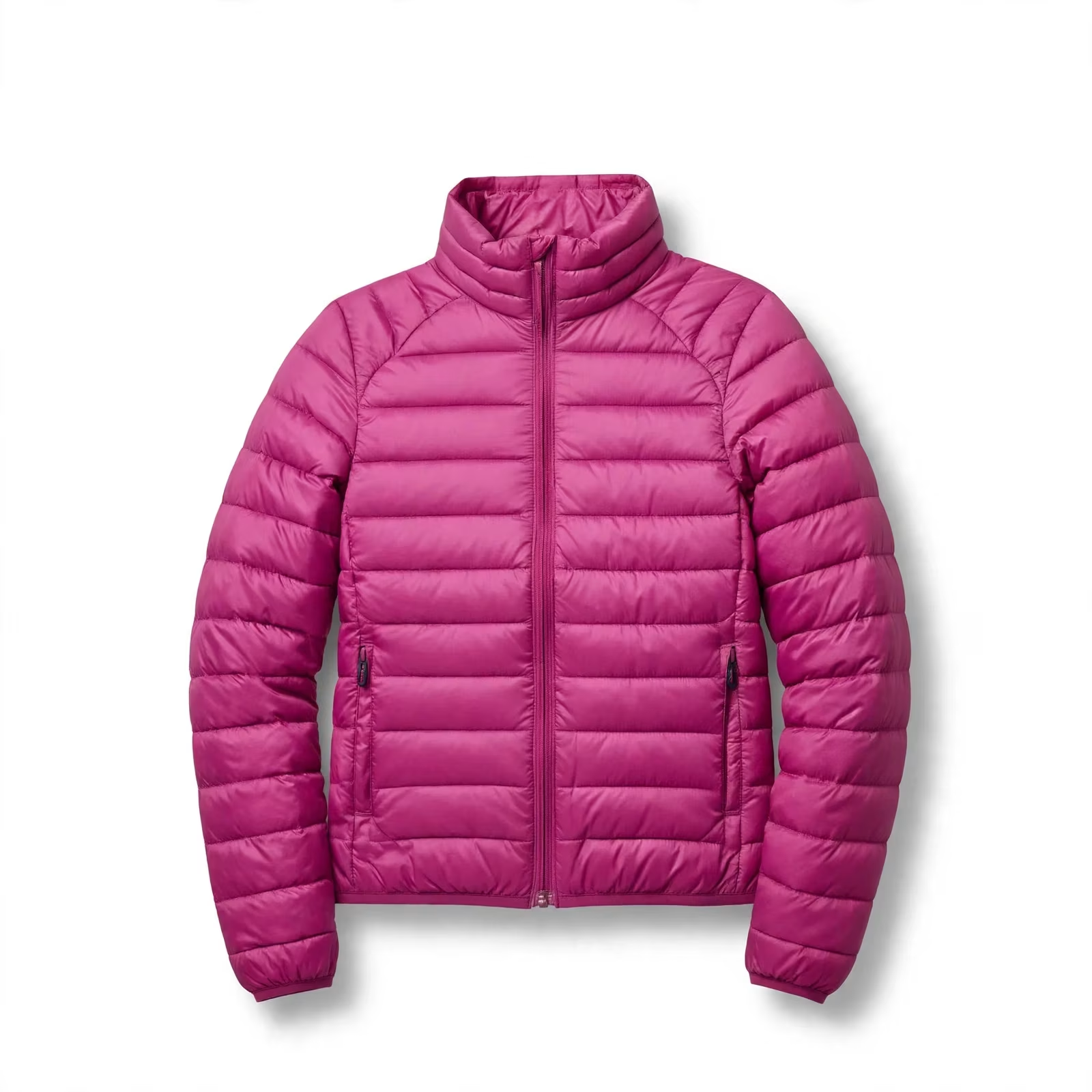
  • Women’s Lightweight Puffer Jacket in Magenta with Zip Pockets

    Women’s Lightweight Puffer Jacket in Magenta with Zip Pockets

    A packable channel-quilted jacket that weighs almost nothing and warms like a winter coat – shown in magenta, produced in your full colour story.

    Made to order in Bangladesh for outerwear importers and retail brands, with your fill, colours, trims and labels, sizes XS to 2XL.

    Puffer Jacket Manufacturer in Bangladesh for Lightweight Outerwear

    SIATEX manufactures this lightweight puffer jacket in Bangladesh for importers and brands whose winter business runs on quilted styles. As a puffer jacket manufacturer we build the whole garment under one specification – shell, fill, quilting, zips and trims – so the jacket that sells in October is identical to the jacket reordered in January. The magenta shown here is one colourway of a four-colour story; the same block runs across a full shade card from black and navy to seasonal brights.

    The design is the modern light puffer in its cleanest form: narrow horizontal channels with an even, low-loft fill, a stand collar that closes right up to the chin, a full front zip colour-matched to the shell, zip hand pockets set into the channel lines, and elasticated cuffs and hem. It layers under a coat in deep winter and works as the outer layer through autumn and spring – the versatility that makes this category the volume driver of outerwear in the United States and Northern Europe.

    Channel Quilting That Stays Even, Zips That Match

    A puffer lives or dies on its quilting. Channels are stitched before filling distribution is locked, fill weight is controlled per panel size, and the loft is checked jacket by jacket so no channel runs fat while its neighbour runs thin – the fault that makes cheap puffers look lumpy on the rail. The side view shows the result: a slim, even profile that still traps real warmth.

    Details are finished to the same standard. The front zip is colour-matched and runs smoothly to the collar top, where a small garage keeps metal off the chin; pocket zips sit inside the channel stitching so the front stays clean; and the shell and lining are cut so the jacket packs into a small roll or its own pocket bag for travel programmes. The detail view shows the zip, collar and channel stitching at close range – that neatness is the product, at rail distance and at arm’s length.

    Shells, Fills and Warmth Levels

    The shell is a fine matte nylon with a light water-resistant finish that shrugs off drizzle and wipes clean; the fill on this style is a synthetic down-alternative that keeps insulating when damp and suits buyers who cannot sell animal down. As a quilted jacket supplier we build the same pattern across a warmth and ethics range:

    • Light synthetic fill for packable travel and layering styles – the jacket shown here
    • Mid-weight synthetic fill for everyday winter in temperate markets
    • Certified down fill for premium programmes that require natural insulation
    • Recycled shell and recycled fill versions for sustainability-led ranges

    Every fill lot is weighed and loft-checked, shells are tested for down-proofness so fill cannot migrate through the weave, and seam allowances are set for quilted construction – the invisible specifications that decide whether a jacket comes back as a reorder or a return.

    Colour Stories, Branding and Private Label

    Colour is how this category sells, so colour is how we plan production. One order can run four, six or more colourways of the same block – magenta, mustard, royal and orange as one story, or a black-navy-olive core with two fashion shades – each with zips and trims matched or contrasted per your tech pack. Embroidery or a small print at chest or sleeve carries your branding, and private label finishing covers neck labels, care labels, hangtags and branded zip pullers.

    Sizes run XS to 2XL on the women’s block, and the same design is graded for men and children so a family outerwear story stays consistent across departments. Packing follows your channel: folded with tissue for retail, vacuum-compressed for freight-sensitive e-commerce programmes – a real saving on a product that is mostly air – and cartons marked to your warehouse system.

    Exporting Quilted Jackets to the USA, Ireland and Worldwide

    US importers anchor this programme, taking light puffers for national retail and promotional outerwear – the price and packability make it a favourite for corporate and event programmes as well as fashion retail. Irish clothing lines buy the same block for their wet, mild winters where the water-resistant shell earns its place, and United Kingdom high-street suppliers run it in wide colour stories. German buyers take mid-weight fills for a colder season, and Finnish companies order branded versions for staff and outdoor programmes.

    Canadian importers add heavier fills for prairie winters, Australian buyers run the light version for autumn, and New Zealand retailers use it for outdoor and travel programmes. German buyers add the cycling-friendly layer for bike-to-work commuters, Dutch buyers take it for their flat, wet climate, and Japanese importers run the magenta colourway for streetwear retailers in Tokyo.

    Cold cities drive this jacket’s order book. In the United States, Chicago, Boston and Denver importers order lightweight puffers for their winter outerwear programmes, while in Ireland, Dublin clothing lines buy the same block for their wet, mild winters. In the United Kingdom, London and Manchester high-street suppliers run the jacket in wide colour stories, and in Germany, Berlin and Munich buyers take mid-weight fills for a colder season. Finnish companies in Helsinki order branded versions for staff and outdoor programmes, and in Canada, Toronto and Vancouver importers add heavier fills for prairie winters. In Australia, Sydney and Melbourne retailers run the light version for autumn, and in Japan, Tokyo importers run the magenta colourway for streetwear retailers. As a wholesale puffer jacket manufacturer, the point is a jacket that packs small, warms well and sells in a full colour story, in every market it sells in.

    Production, Quality Control and Ordering

    Production runs through partner factories in Bangladesh with dedicated padded-jacket lines – quilting, filling and finishing under one roof, with inline checks at every stage. Fill weights are verified by weight and loft, zips are tested, and finished jackets are inspected for channel evenness, stitching and packing before cartons close.

    Ordering is inquiry-based. Tell us the fill and warmth level, your colour story, sizes and branding – we return a price for the complete programme, including labelling and packing. Sampling comes first so you can check the loft, the fit and the colour; bulk production follows your approval, with lead times confirmed in writing before you commit.

    For the end customer this jacket is simple to live with: it shakes out of its packed roll without creasing, the water-resistant shell shrugs off a shower, and the stand collar and zip garage keep out wind without bulk. That is why the same block keeps reordering, season after season.

    Why Outerwear Buyers Produce Puffers with SIATEX

    Padded jackets punish fragmented sourcing – fill from one hand, quilting from another, shade drifting between runs. Our model is one accountable partner for the whole garment: one specification, one fill standard, one colour plan, and a Toronto sales office working North American and European hours while production runs in Bangladesh. The result is a puffer that packs small, warms well and arrives in the colour story you approved.

    Fit, Sizing and Programme Planning

    The women’s block is a regular fit with room for knitwear underneath, graded XS to 2XL with the cut long enough to cover the waistband and short enough to move freely. Length sits at the hip on the standard block, with a longer parka-length version available for buyers who need it, and the elasticated hem keeps the warmth in without a drawcord.

    Season planning matters in this category more than most: colour stories are sampled in spring, bulk production runs in summer for autumn delivery, and reorders are scheduled around the first cold snap rather than after it. Buyers who plan with us get their full colour story on time; buyers who chase the weather do not.

    Frequently Asked Questions

    What fill options do you offer for puffer jackets?

    Synthetic down-alternative in light and mid weights, certified down for premium programmes, and recycled shell and fill options for sustainability-led ranges.

    How many colourways can one order include?

    As many as your story needs – four is typical, and each colourway gets matched zips and trims. All colourways run in the same specification, so the jacket is identical across the shade card.

    Which countries do you export puffer jackets to?

    Regular programmes run to the United States, Ireland, the United Kingdom, Germany and Finland, with growing volumes to Canada, Australia and Japan.

    Can the jacket pack into its own pocket or bag?

    Yes. The light-fill version is built to pack down small, and we supply it rolled, in a pocket bag or vacuum-compressed depending on your channel.

    Do you make men’s and children’s versions of this jacket?

    Yes. The same channel-quilted design is graded for men and children, so a buyer can run one consistent outerwear story across the whole family range.

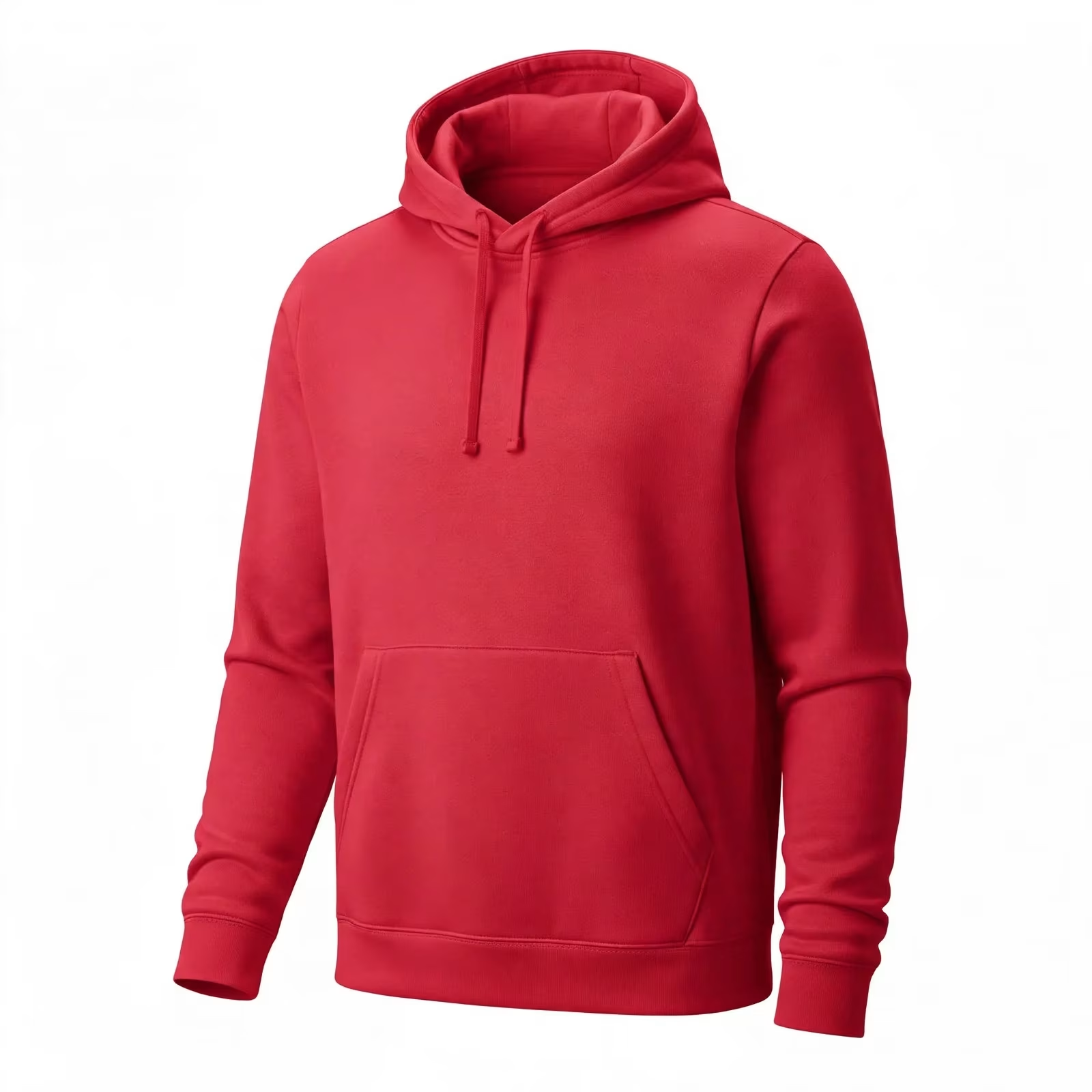
  • Men’s Red Pullover Hoodie with Kangaroo Pocket for Teams and Brands

    Men’s Red Pullover Hoodie with Kangaroo Pocket for Teams and Brands

    Hoodie Manufacturer in Bangladesh for Athletic and Merch Programmes

    SIATEX manufactures this pullover hoodie in Bangladesh for buyers who move fleece in volume – sportswear brands, merchandise companies, university and team suppliers. As a hoodie manufacturer we produce the style both ways the market buys it: as a premium blank with a clean chest for decorators, and as a finished decorated garment with the buyer’s print or embroidery applied on our floor. The red on this page is a team colour from a live programme; the same pattern runs in more than thirty stock shades plus dyed-to-order colours.

    The design is the athletic standard the whole category is measured against: a double-lined drawstring hood, a kangaroo pouch pocket, set-in sleeves, and ribbed cuffs and hem that hold the silhouette. Nothing about it is decorative for its own sake – it is the hoodie a player pulls on after training and a fan wears all winter, which is why this block anchors so many repeat programmes in the United States and France.

    Double-Lined Hood, Kangaroo Pocket and a Fit That Works

    The hood is two layers of fleece, not one, so it sits with structure around the face instead of collapsing, and it keeps its shape through washing. The drawstring runs in a stitched channel with finished ends – the detail view shows the cord and its knotted tip at close range – and for youth sizes the same style is produced without drawstrings to meet children’s safety requirements in Europe and North America.

    The kangaroo pocket is bartacked at both openings, because that is where hoodies tear when wearers haul phones, keys and cold hands in and out a hundred times a week. The body is cut with enough room for a layer underneath without ballooning, sleeves are shaped rather than straight tubes, and the ribbed hem sits at the hip without riding up. Every stress point a hoodie actually fails at – pocket corners, hood joins, cuff seams – is reinforced in the specification rather than left to chance.

    Brushed Fleece Weights for Every Season and Budget

    The face of the fabric is a fine loopback knit; the inside is brushed for warmth and softness, as the hood detail shows. As a fleece hoodie supplier we run this pattern across the weights the market works in:

    • Mid-weight fleece for year-round retail and merch – the versatile standard
    • Heavyweight fleece for winter teamwear and premium streetwear ranges
    • Cotton-rich fleece for the softest hand feel and the best print surface
    • Polyester-rich athletic fleece for training lines that need moisture management

    Print performance is specified with the fabric, not after it: cotton-rich faces take screen print and DTG cleanly, embroidery sits flat without puckering on the mid and heavy weights, and every fabric lot is checked for pilling and colour fastness before cutting – a red this strong has to stay this strong after fifty washes in Ohio and in Lyon alike.

    Printing, Embroidery and Full Private Label

    The blank chest is the point of this style. Buyers decorate it four ways through us: screen printing for bold chest and back graphics at volume, embroidery for crests and left-chest logos on team and corporate programmes, DTG for photographic merch designs, and appliqué or puff print for fashion-led ranges in Germany and the United Kingdom. Names and numbers for team orders are applied in the same pass, so a squad set arrives complete.

    Private label finishing is standard – your woven neck label, printed size and care labels, hangtags and barcodes, folded and bagged to your retail or fulfilment spec. Sizes run XS to 3XL on men’s grading, with women’s and youth versions of the same block, so a brand can carry one hoodie story across a whole store. Colourways beyond this red – black, navy, marl grey, forest, royal and seasonal shades – are dyed to an approved lab dip so repeat orders match.

    Exporting Pullover Hoodies to the USA, France and Worldwide

    The United States is the largest market for this style: team dealers, merch companies and print shops take it blank and decorated for schools, clubs and events. France follows closely – sports clubs and fashion retailers in France run it in cotton-rich fleece with embroidered crests. Germany takes heavyweight versions for workwear-adjacent programmes and streetwear, while the United Kingdom takes mid-weight fleece for university merch and retail.

    Buyers in the Netherlands, Belgium and Australia run the style for online streetwear labels, and Canadian buyers in Toronto and Vancouver order it through our Toronto sales office with sampling in their own time zone. In the Gulf states, UAE buyers take it for teamwear and corporate programmes, and in Japan and South Korea it is a fashion-led streetwear piece with puff print and embroidery.

    The red hoodie has its own geography. Team and group buyers in Houston and Seattle order it alongside their winter basics ranges, where it layers under shell jackets; in Chicago and Boston, college merch buyers take it in team red for their autumn and winter lines. In France, Parisian streetwear labels in Paris order it for winter collections, while in the United Kingdom, London and Manchester university merch buyers take it as their core hoodie in team colours. German buyers in Berlin and Munich order it for premium streetwear ranges, and in Australia, Sydney and Melbourne retailers stock it for autumn and winter. In Japan, Tokyo and Osaka buyers order it as a fashion-led streetwear piece, valuing the clean chest for bold graphics. As a wholesale hoodie supplier, the point is a hoodie that carries a team colour, a crest or a graphic cleanly, in every market it sells in.

    Production, Quality Control and Ordering

    Production runs through partner factories in Bangladesh where fleece is a core line. Fabric lots are shade-checked against the lab dip before cutting, and finished hoodies are inspected at every stage – measurements, print registration, embroidery, and pocket and hood construction.

    Ordering is inquiry-based. Tell us the fabric weight, colour, sizes and whether you want blanks or decorated pieces – we return a price for the complete programme, including labelling and packing. Sampling comes first so you can check the fleece hand feel and print quality; bulk production follows your approval, with lead times confirmed in writing before you commit.

    Wear, Washing and Keeping the Red Bright

    A hoodie earns repeat orders when the fiftieth wear looks like the fifth. The fleece specified here is anti-pill and colour-fast, so the red stays deep through repeated washing at 30 degrees. Ribbed cuffs and hem hold their shape, the drawstring stays in its channel, and the kangaroo pocket keeps its bartacked corners – the small details that make a hoodie a favourite rather than a one-season purchase.

    Why Hoodie Buyers Produce with SIATEX

    Most hoodie problems are really consistency problems – a shade that drifts, a print that moves two millimetres, a pocket that tears in the first month. Our model answers with a single approved specification, held on file and repeated across seasons, and a Toronto sales office working North American and European hours while production runs in Bangladesh. One sampling process, one specification, one accountable contact.

    Sizing, Fit and Colour Programmes

    The block is a regular athletic fit – true to size with room for a base layer – graded from XS to 3XL on men’s grading, with women’s and youth versions cut from the same pattern. This is the fit that sells to team dealers and merch companies alike, because it works for a player after training and a fan at a match.

    Colour programmes are where this style earns its keep for brands. Beyond this red, the standard shades are black, navy, marl grey, forest and royal, plus seasonal colours developed per buyer. Every shade is dyed to an approved lab dip, and fabric lots are shade-checked before cutting so a repeat order in the same colour matches the first.

    Frequently Asked Questions

    Can we order this hoodie blank for our own printing?

    Yes. The style is produced as a decorator blank with a clean chest and your private labels, or decorated on our floor with screen print, embroidery or DTG.

    What fleece weights are available?

    Mid-weight for year-round programmes and heavyweight for winter and premium ranges, in cotton-rich and polyester-rich options.

    Which countries do you export hoodies to?

    Regular programmes run to the United States, France, Germany, the United Kingdom and Canada, with growing volumes to Australia, Japan and the Gulf states.

    Can youth sizes be made without drawstrings?

    Yes. Youth versions of this block are produced without hood drawstrings to meet children’s safety requirements in Europe and North America.

    How do repeat orders stay the same colour?

    Every programme shade is approved as a lab dip and held on file; fabric lots are shade-checked against it before cutting, so reorders match.

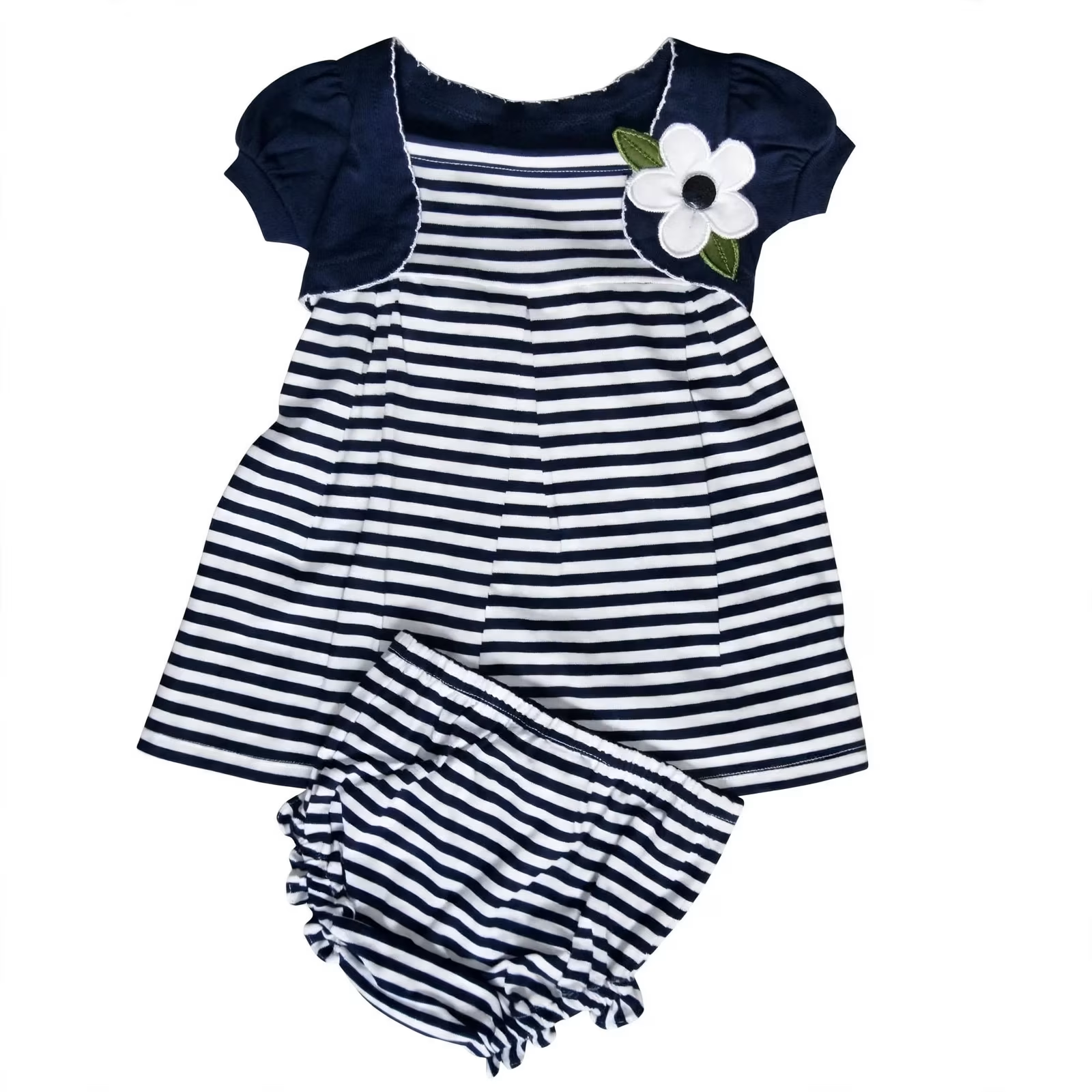
  • Baby Girl Navy Stripe Dress Set with Flower Appliqué and Matching Bloomers

    Baby Girl Navy Stripe Dress Set with Flower Appliqué and Matching Bloomers

    Baby Dress Manufacturer in Bangladesh for Boutique and Retail Programmes

    SIATEX manufactures this baby dress set in Bangladesh for brands that sell complete outfits. As a baby dresses manufacturer we sew the dress and its matching bloomer as one programme – same striped jersey, same dye lot, packed together – so a boutique in the United States or a retail chain in Spain receives a finished two-piece set in every packet, not two items a store team has to pair up. Babywear is detail work at small scale, and it is one of the lines our partner factories are set up for best: fine jersey, small parts sewn securely, and hand-finishing at the appliqué station.

    The design pairs an empire-waist dress in navy and white yarn-dyed stripes with a solid navy yoke and short puff sleeves. A white fabric flower with a button centre and two green leaves is appliquéd at the chest, as the detail view shows up close – satin-stitched edges, a securely sewn button, nothing glued or loosely tacked. The matching bloomer is cut from the same stripe with ruffled, elasticated leg openings, so the set photographs, shelves and gifts as one outfit.

    Empire Waist, Puff Sleeves and a Proper Appliqué

    The empire line sits high, just under the chest, which does two things for a baby dress: it leaves the tummy completely free – important for comfort after feeds and for fitting over a nappy – and it gives the skirt its soft gather and swing, visible in the shape view. Gathers are distributed evenly across the front and back rather than bunched at the sides, so the dress hangs the same way in the packet as it does in the photograph.

    The yoke and sleeves are cut in solid navy to frame the stripe, with the front yoke edges piped in white for that classic nautical finish. Puff sleeves are gathered into a soft band that does not dig into a baby’s arm. The flower appliqué is built in layers – petals satin-stitched onto the yoke, leaves beneath, and the centre button sewn through with repeated passes, then pull-tested in inspection, because on babywear every attached part is a safety question first and a decoration second.

    Yarn-Dyed Stripe Jersey, Soft from the First Wear

    The stripe on this dress is yarn-dyed, not printed – the navy and white are in the yarns themselves, so the stripes stay crisp and even through washing and never crack or fade in patches the way a surface print can. The base is a fine cotton single jersey chosen for baby skin: smooth face, soft hand feel, and enough body to hold the gathers without a lining. As a baby clothing supplier we run the same design across fabric options for different markets and seasons:

    • Cotton jersey for the classic soft hand feel – the fabric shown here
    • Organic cotton jersey for certified baby ranges in the United States and Europe
    • Cotton interlock for a slightly warmer, double-faced finish in autumn programmes
    • Combed cotton blends where a buyer needs extra wash durability at volume

    All fabrics for baby programmes are specified for softness and colour fastness first – a dress for a six-month-old is washed more in one season than an adult garment is in a year, and the stripe has to come through that still looking new.

    Colourways, Appliqué Designs and Gift-Ready Packing

    The nautical navy story shown here is one colourway of a flexible pattern. The same dress runs in pink and white, red and white, and mint stripe stories, and the solid yoke and sleeve colour changes with each one. Appliqué designs are developed per buyer – flowers, anchors, animals and initials all come through the same satin-stitch station – and embroidery can replace appliqué where a boutique in Portugal or Bulgaria wants a different texture at the chest.

    Sizes run from 0-3 months through 18-24 months, graded so the empire line and bloomer fit stay true at every size. Packing is where baby sets earn their margin: dress and bloomer folded together on a hanger or in a gift-ready packet with your hangtag, size label and barcode, packed in the size ratios your stores sell. Private label buyers add their woven brand label at the back neck and their own care label – the set arrives ready for your shelf, your photography and your gift buyers.

    Supplying Baby Dress Sets to the USA, Europe and Beyond

    American buyers anchor this programme: baby boutiques and online stores in the USA take the stripe set for spring and summer, gift retailers add it to newborn ranges, and private label brands run it under their own labels with custom appliqués. In Europe, distributors in Spain and Portugal supply it to children’s chains, Bulgarian and Cypriot baby shops take it for occasionwear, and Dutch buyers order it as a gift set for new-baby ranges. Our Toronto sales office supports Canadian buyers in Ontario and British Columbia with sampling and communication in their time zone.

    Malta and Luxembourg buyers take gift-packed versions for premium baby stores, while United Kingdom buyers use it as a spring dress programme in boutique ranges. In Australia and New Zealand it is a spring and summer staple, sold as a complete outfit rather than as a separate dress and bloomer – which is why matching fabric and dye lot matter: the dress and bloomer must arrive together, matched in every market they sell in. In the United States, buyers in New York and California order the stripe set for baby boutiques and online stores, while Canadian buyers in Toronto and Vancouver order it as a gift set for baby showers.

    Baby occasionwear travels surprisingly far from one pattern. Spanish baby boutiques in Madrid and Barcelona stock the stripe dress for christenings and first-birthday photographs, while in Italy, Milan and Rome baby boutiques order it for spring and summer collections. In the United Kingdom, London baby boutiques take the navy stripe as a spring wardrobe staple, and in France, Paris and Lyon children’s departments order it for their private label baby ranges. German buyers in Hamburg and Munich take the set for premium baby stores, while in Australia, Sydney and Melbourne retailers stock it as a spring and summer dress set. In Japan, Tokyo and Osaka baby shops order it for gift sets, valuing the soft yarn-dyed stripe and the safe, satin-stitched appliqué. As a wholesale baby dress manufacturer, the point is a dress that photographs as one outfit, packs as one unit, and arrives matched in every market it sells in.

    Production, Safety Inspection and Ordering

    Production runs through partner factories in Bangladesh with dedicated babywear lines. Inspection on babywear is tighter than on any other category: every button is pull-tested, trims are needle-detected, and the finished garments are checked for loose threads or rough seams before packing.

    Ordering is inquiry-based. Send the colourway or stripe you want, the appliqué design, sizes and quantities, and the packing plan – we return a price for the complete set programme, not a price per piece that leaves the bloomer to be costed later. Sampling comes first, bulk production follows your approval, and lead times are confirmed in writing before you commit.

    Washing and Everyday Wear

    Baby clothes live in the laundry basket, so this set is built for the wash cycle: yarn-dyed stripes that stay crisp, an appliqué satin-stitched flat so it cannot catch on tiny fingers, and a bloomer with elastic that keeps its recovery. The set photographs well after many washes, which is what keeps it in a boutique’s repeat programme.

    Why Babywear Buyers Work with SIATEX

    Babywear punishes sloppy sourcing faster than any other category – a loose button or a scratchy seam is a complaint within days, not months. Our model is one accountable partner for both pieces: one fabric delivery, one dye lot, one grading system and one packing plan, with a Toronto sales office working North American and European hours while production runs in Bangladesh. The result is a set that looks like a set, arrives as a set, and sells as a set.

    Packing That Sells the Set

    Baby sets are bought with the eyes, so packing is finished by hand – the dress smoothed over its bloomer, the flower centred, the hangtag straight. Packing follows your channel: gift boxes for premium baby stores, polybags for online retail, and mixed sizes in one carton so a small boutique can receive its whole spring story in a single delivery.

    Frequently Asked Questions

    What sizes does the baby dress set come in?

    From 0-3 months up to 18-24 months, graded as one system so the empire fit and bloomer stay correct at every size.

    Is the flower appliqué safe for babies?

    Yes. The petals and leaves are satin-stitched flat, and the centre button is sewn through with repeated passes and pull-tested before the garment leaves the floor.

    Can we change the stripe colours and appliqué design?

    Yes. The dress runs in your stripe colourway with a matching solid yoke, and appliqué motifs are developed per buyer.

    Which countries do you export baby dresses to?

    Regular programmes run to the United States, Spain, Portugal, Bulgaria, Cyprus and the United Kingdom, with growing volumes to Canada, Australia and Japan.

    Do the dress and bloomer always match exactly?

    Yes. Both pieces are cut from the same fabric delivery and dye lot and packed together as one set, so the dress and bloomer arrive matched.

  • Girls Navy Floral Two-Piece Set with Ruffle Sleeve Top and Leggings

    Girls Navy Floral Two-Piece Set with Ruffle Sleeve Top and Leggings

    Girls Clothing Set Manufacturer in Bangladesh for Coordinated Outfits

    SIATEX produces this two-piece set in Bangladesh for children’s wear buyers who sell outfits, not separates. As a girls clothing set manufacturer we cut the top and the leggings from the same fabric roll and the same print run, so the navy ground and the white floral match exactly across both pieces – the detail that makes a set look like a set on the rail and in the customer’s photographs. Retailers in France and Germany build whole spring stories on this principle: one print across a top-and-legging set, a dress and a baby romper, all arriving together.

    The design on this page pairs an A-line sleeveless top with gathered ruffle cap sleeves and a round neck, with full-length leggings on an elastic waist. Both pieces carry the same all-over print – hand-drawn style floral outlines scattered with pin dots – so the outfit reads as one thought from shoulder to ankle, as the front and flat views show. It is a daywear set that also passes for sleepwear-adjacent comfort, which is why the pattern sells across so many European children’s departments.

    Ruffle Sleeve Top and Legging Construction

    The top is cut with a gentle A-line so it swings over the leggings without clinging, and the armhole is finished with a small gathered ruffle in self fabric – a soft detail that costs little in production and lifts the whole set above a plain vest-and-legging combination. The neck is bound in self fabric with twin-needle stitching, flat enough to sit comfortably and strong enough for the way children pull tops off over their heads.

    The leggings are a true legging block, not a slim trouser: a high enough rise for bending and playground use, an elastic waistband encased so it cannot twist in the wash, and ankle hems that stay put. Because the two pieces are graded together, the top length and legging length stay in proportion at every size – a 4-year set and a 12-year set are the same outfit grown properly, which the flat view shows clearly. All seams on skin-contact areas are finished soft, and there are no drawstrings or loose cords anywhere on the set.

    Soft Single Jersey That Prints Cleanly

    Both pieces are cut from cotton single jersey with a touch of elastane – soft against skin, breathable for all-day wear, and with the recovery that keeps legging knees and seat from bagging by lunchtime. The knit is fine and even, which is what lets a line print like this floral stay sharp: thin white outlines and pin dots print cleanly without bleeding into the navy ground, as the detail view shows at close range.

    As a printed clothing set supplier we offer the same construction across fabric options matched to market and season:

    • Cotton elastane jersey for spring and summer sets – the fabric shown here
    • Organic cotton jersey for eco-led children’s ranges in Scandinavia and Germany
    • Brushed-back jersey for autumn weight sets with a warmer hand feel
    • Matching rib for necks and cuffs when a story needs solid trims

    Print colourways are developed per buyer – this navy and white story also runs in blush, sage and charcoal grounds, and one print can be carried across several colourways in a single order.

    Your Print, Your Sizes, Your Packing Ratios

    Sets are bought in ratios, so our production is planned in ratios. Send us your size curve – for example a spread across 2-3, 4-5, 6-7, 8-9, 10-11 and 12-14 years – and we cut, sew and pack to it, with each set folded together on a hanger or in a polybag as one selling unit. Buyers in Spain and Italy often take the same set in two colourways per size; chains in the United Kingdom add a third for online-only stories. The system holds either way because the pack plan is written into the order from the start.

    Your artwork leads the print development: all-over prints are engineered so motifs fall naturally across both pieces, strike-offs are approved before bulk printing, and placement is checked across the full size range, not only the sample size. Branding is yours throughout – woven or printed main labels, size labels, hangtags with your barcode, and cartons marked to your distribution centre’s requirements.

    Exporting Girls Clothing Sets Across Europe and Beyond

    Children’s sets are a European strength for Bangladesh production, and our order book shows it: high-street and department-store buyers in France, Germany, the Netherlands and Belgium buy this kind of two-piece set in volume, usually in ratios across 2 to 14 years. Their orders are planned a season ahead, with the print story and the colourways approved together, so a spring delivery in Paris and a spring delivery in Munich carry the same navy ground and the same floral repeat – the consistency that lets a set programme scale without a quality drift between markets.

    Beyond Europe, buyers in the United States take the set for boutique and online children’s stores, and Canadian retailers in Toronto and Vancouver order it through our Toronto sales office with sampling and communication in their own time zone. In Australia and New Zealand it is a spring and summer wardrobe line, sold as a complete outfit rather than as separates – an important distinction, because a two-piece set needs both pieces to arrive matched, and our factories grade and pack them as one unit. We also ship to buyers in the Gulf states, where spring sets are sold through the year, and to distributors in Japan and South Korea who value the soft single jersey and the clean print.

    Children’s sets sell on a different map again. In the United Kingdom, childrenswear buyers in London, Manchester and Birmingham buy two-piece sets as a spring wardrobe line, while buyers in Dublin order the same set as a gift line with matching cardigans. In France, children’s departments in Paris, Lyon and Lille take the floral print story in navy and blush, and German buyers in Hamburg, Munich and Berlin order the set for their private label spring ranges. Online children’s retailers in the Netherlands and Belgium build matching sets around one print, selling the top-and-legging set beside a matching dress, and in Scandinavia buyers in Stockholm, Copenhagen and Oslo value the clean, simple construction and the absence of drawstrings. In the United States, buyers in New York and California order matching sets for boutique children’s stores, while in Canada the Toronto sales office supports buyers across Ontario and British Columbia. In Australia, Sydney and Melbourne retailers take the set for spring and summer, and in Japan, Tokyo and Osaka buyers order it as a soft, easy-wear outfit for everyday use. As a wholesale clothing set manufacturer, the point is a set that photographs as one outfit, packs as one unit, and arrives matched in every market it sells in.

    Production, Safety Checks and Ordering

    Production runs through partner factories in Bangladesh where children’s wear is a core line, with inline checks on the sewing floor and a final inspection of measurements, print placement, stitching and packing before cartons close. The print strike-off is approved with you before bulk printing, and a pre-production sample in your artwork is available on every programme.

    Ordering is inquiry-based. Send your artwork or print direction, the size range and ratio, fabric, quantities, and the packing plan – we return a price for the complete programme. Sampling comes first, bulk production follows approval, and lead times are confirmed in writing before you commit.

    Wear, Washing and Everyday Life

    Parents judge a set by the fifth wash, not the first fitting, so the construction is specced for everyday life: seams that sit flat under a car seat or a school bag strap, a waistband that keeps its hold after washing, colours that stay true at 30 degrees, and a knit that survives tumble drying on low. Add a light jacket and the set works across three seasons, which is why so many European buyers treat it as a core line rather than a one-off print story.

    Why Children’s Wear Buyers Produce Sets with SIATEX

    A set programme fails in small ways when production is fragmented – the top from one line, the leggings from another, the print from a third – and the set arrives as two pieces that almost match. Our model is one accountable partner for both pieces: one fabric roll, one print run, one grading system and one packing plan, with a Toronto sales office working North American and European hours while production runs in Bangladesh. The result is a set that looks like a set, arrives as a set, and sells as a set.

    How Sets Are Packed for Retail

    Each set leaves the floor as one selling unit – top and leggings folded together, on a hanger or in a polybag, with the label, size mark and barcode the retailer needs for the shelf or the website. Packing follows your channel: folded sets for retail shelves, hanging sets for department stores, and mixed colourways in one carton so a small boutique can receive its whole spring story in a single delivery.

    Frequently Asked Questions

    What sizes does this girls set come in?

    The programme runs from 2 to 14 years, graded as one system so the top and leggings stay in proportion at every size.

    Can we use our own all-over print artwork?

    Yes. Send your artwork and we engineer the repeat for both pieces, approve a printed strike-off with you, and then run bulk production.

    Which countries do you export children’s sets to?

    Regular programmes run to France, Germany, Spain, Italy, the United Kingdom, the Netherlands and Scandinavia, with growing volumes to the United States, Canada and Australia.

    Is the set made without drawstrings for child safety?

    Yes. There are no drawstrings or loose cords on this design, seams on skin-contact areas are finished soft, and trims are tested for pull strength before bulk production.

    Can the same print run in other colourways or products?

    Yes. One print story can run across several ground colours and across matching products – dresses, rompers and tees – so a whole spring story stays consistent across the range.